


Pressed in Brass Coil Heaters - Hot Runner Coil Heaters:
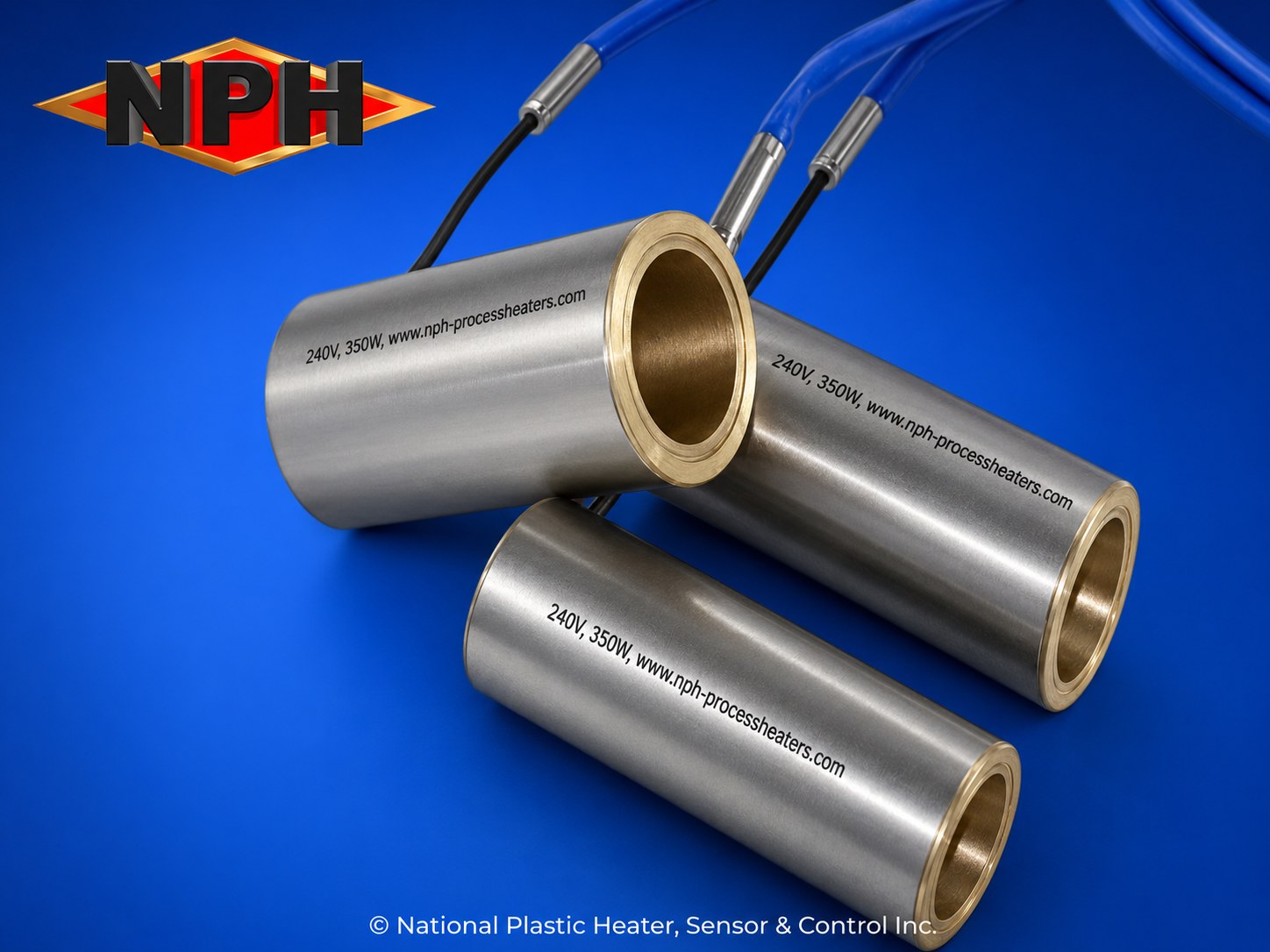
NPH Pressed in Brass Coil Heaters with Overall S.Steel Cover-Group
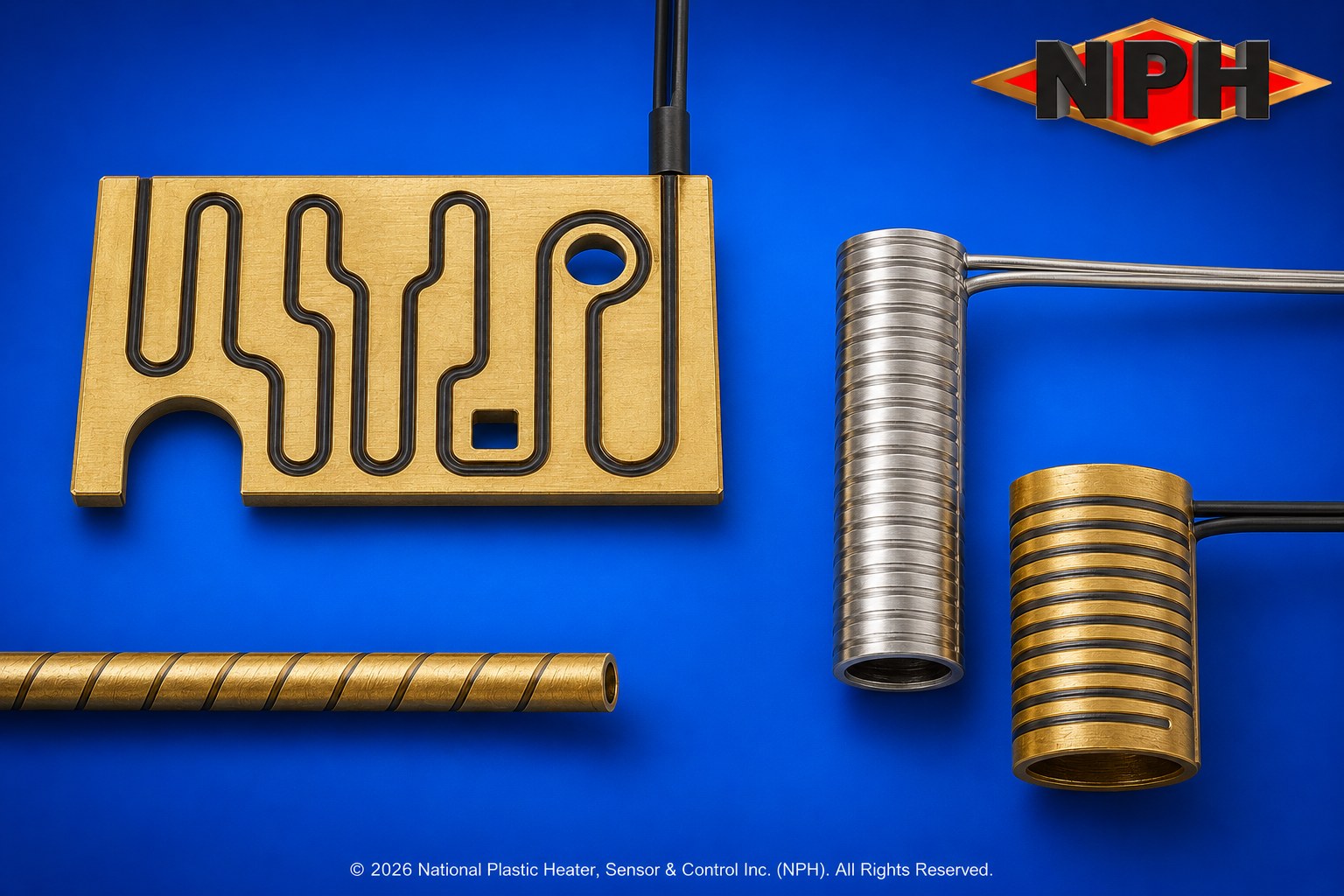
Pressed in Brass Platen Heaters & Coil Heaters with Assorted Coil Heater Tracks
Pressed In Brass Coil Heaters for Hot Runner Nozzles, Manifolds & OEM Heating Applications
Pressed in brass coil heaters are high-performance electric resistance heaters designed for applications requiring accurate heat transfer, repeatable temperature control and durable operation in compact heated components.
Unlike a standard coil heater that is simply wound around a nozzle or component, a pressed in brass coil heater is built around a precision-machined brass body. A heater path is machined into the brass and the coil heater is pressed into position, creating a highly repeatable heat pattern from one heater to the next. This construction helps improve thermal transfer, reduce air gaps and provide more consistent heat distribution around the nozzle, manifold or heated part.
NPH pressed in brass coil heaters deliver many of the advantages of cast in brass coil heaters while reducing common issues associated with the casting process. With cast in brass heaters, molten brass is poured around the heater, which can allow heater coils to shift or create risk to the thermocouple junction. In a pressed in brass design, the coil heater is not exposed to molten brass. This helps protect the heater profile, maintain thermocouple integrity and support more consistent performance.

These heaters were originally developed for demanding markets such as mass spectrometry and precision instrumentation, where compact size, rapid response and temperature repeatability are essential. They are also well suited for plastic injection molding, hot runner systems, extrusion, rubber molding, packaging equipment, laboratory systems, medical equipment, semiconductor processing, analytical instruments and custom industrial process heating assemblies.

Pressed in brass coil heaters are especially useful where a nozzle or manifold requires a specific heat profile. For example, heat can be concentrated toward the tip or other areas where heat loss is greatest, while reducing excess temperature rise in less critical zones. This can help improve process stability, reduce cycle time, support better part quality and extend the range of materials that can be processed in a hot runner system.
Construction typically includes a compact coil heater with a Cr-Ni steel sheath, magnesium oxide insulation, resistance wire, optional integrated thermocouple and high-temperature lead termination. NPH pressed in brass coil heaters can be supplied with Type J or Type K thermocouples in internal, external wound-in or external slotted configurations. Standard options may include 48" Teflon leads, stainless steel sleeves, moisture-resistant transition heads and custom lead exit locations.
Key advantages include excellent thermal contact, repeatable heater positioning, faster response compared with some cast in brass designs, flexible custom design, high watt density capability and a brass body that helps distribute heat evenly. These heaters can also reduce variability between replacement parts because the machined heater path can be repeated accurately for OEM programs.
There are also practical considerations. Pressed in brass coil heaters are custom engineered, so accurate dimensional information is required for the nozzle, bore, manifold or heated component. The brass body and heater are normally supplied as a finished assembly, so the complete unit is typically replaced rather than rewinding the heater in the field. For very simple applications, a standard coil heater or band heater may be more economical. For precision OEM hot runner, laboratory, medical, packaging or instrumentation applications, however, the improved fit, repeatability and heat transfer of pressed in brass construction can offer significant process benefits.
NPH can manufacture pressed in brass coil heaters for custom nozzle diameters, manifold blocks, small heated plates, analytical equipment, mass spectrometry components and specialty OEM heating applications. Available options include custom inside diameter, outside diameter, width, length, voltage, wattage, watt density, lead length, lead protection, stainless steel sleeve, brass body geometry, mounting holes, sensor location, Type J or Type K thermocouple and application-specific heat profiling.
For best results, provide NPH with a drawing, sample part or dimensional details, including voltage, wattage, operating temperature, lead exit direction, thermocouple requirement, available clearance, nozzle diameter and the application environment. NPH can review the application and recommend a pressed in brass coil heater design that supports reliable heat transfer, accurate control and long service life.
Pressed In Brass Coil Heater Technical Downloads
 Coil Heaters FAQ PDF
|
|
Custom Coil Heaters & Mini Coil Heaters PDF
|
|
NPH Coil Heaters Specifications PDF
|
|
How to Properly Install Coil Heaters – Technical Letter
|
Pressed In Brass Coil Heater FAQs
What is a pressed in brass coil heater?
 What is a pressed in brass coil heater?
A pressed in brass coil heater is a custom electric resistance heater where a coil heater is pressed into a machined brass body. This creates strong thermal contact, repeatable heat transfer and a controlled heat profile for nozzles, manifolds, instruments and OEM heated components.
What is the difference between pressed in brass and cast in brass coil heaters?
Pressed in brass heaters use a machined brass path and the coil heater is pressed into place. Cast in brass heaters are made by pouring molten brass around the heater. Pressed in brass construction helps reduce risks such as shifted coil position, air pockets and thermocouple junction damage.
Where are pressed in brass coil heaters used?
Common applications include hot runner nozzles, injection molding manifolds, sprue bushings, extrusion tooling, packaging equipment, laboratory instruments, medical devices, mass spectrometry equipment, analytical instruments and custom OEM heating assemblies.
Can pressed in brass coil heaters include a thermocouple?
Yes. Pressed in brass coil heaters can be supplied with Type J or Type K thermocouples. Options may include internal thermocouples, external wound-in thermocouples or external slotted thermocouple configurations depending on the application.
What are the advantages of pressed in brass coil heaters?
Key advantages include excellent heat transfer, repeatable heat profile, faster response, improved temperature uniformity, high watt density capability, custom brass body design, flexible lead exits and reduced risk of damage associated with molten-brass casting.
What information is needed to quote a custom pressed in brass coil heater?
Typical quote information includes inside diameter, outside diameter, length, voltage, wattage, operating temperature, lead length, lead exit location, thermocouple type, sleeve or sheath requirements, drawing or sample part, and application details.

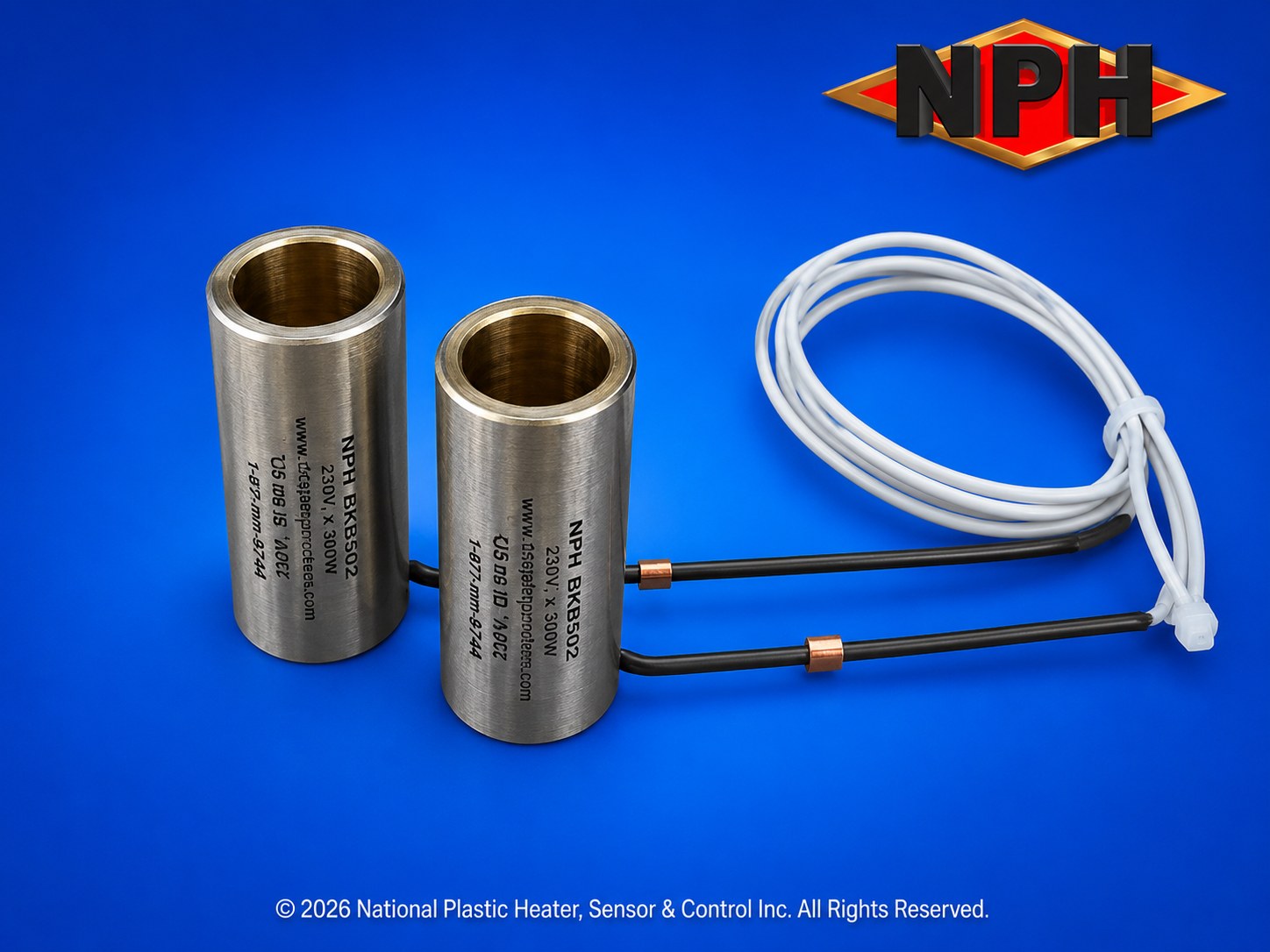
NPH Mini Pressed in Brass Coil Heaters with S.Steel Sleeve
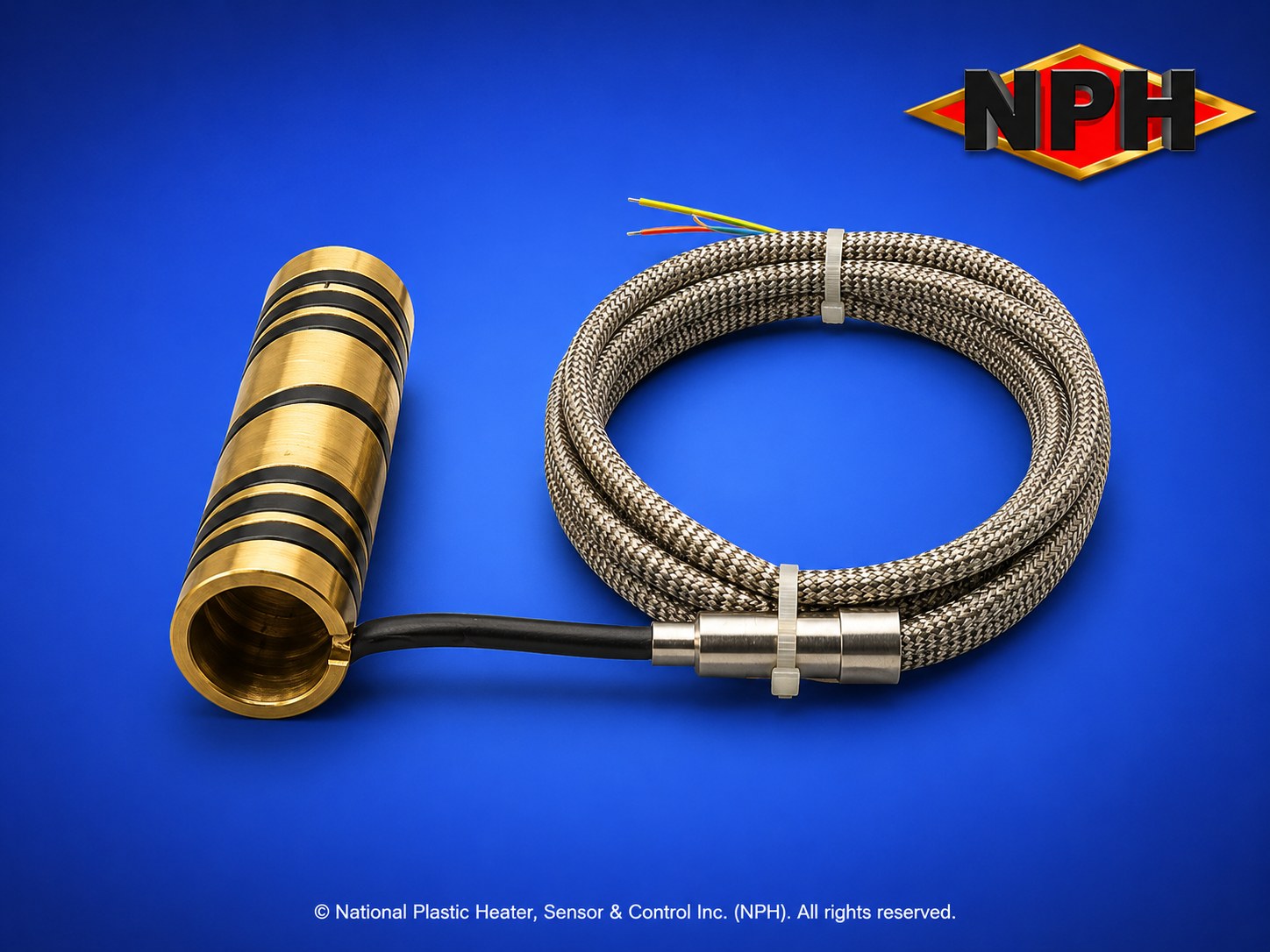
Pressed in Brass Coil Heater
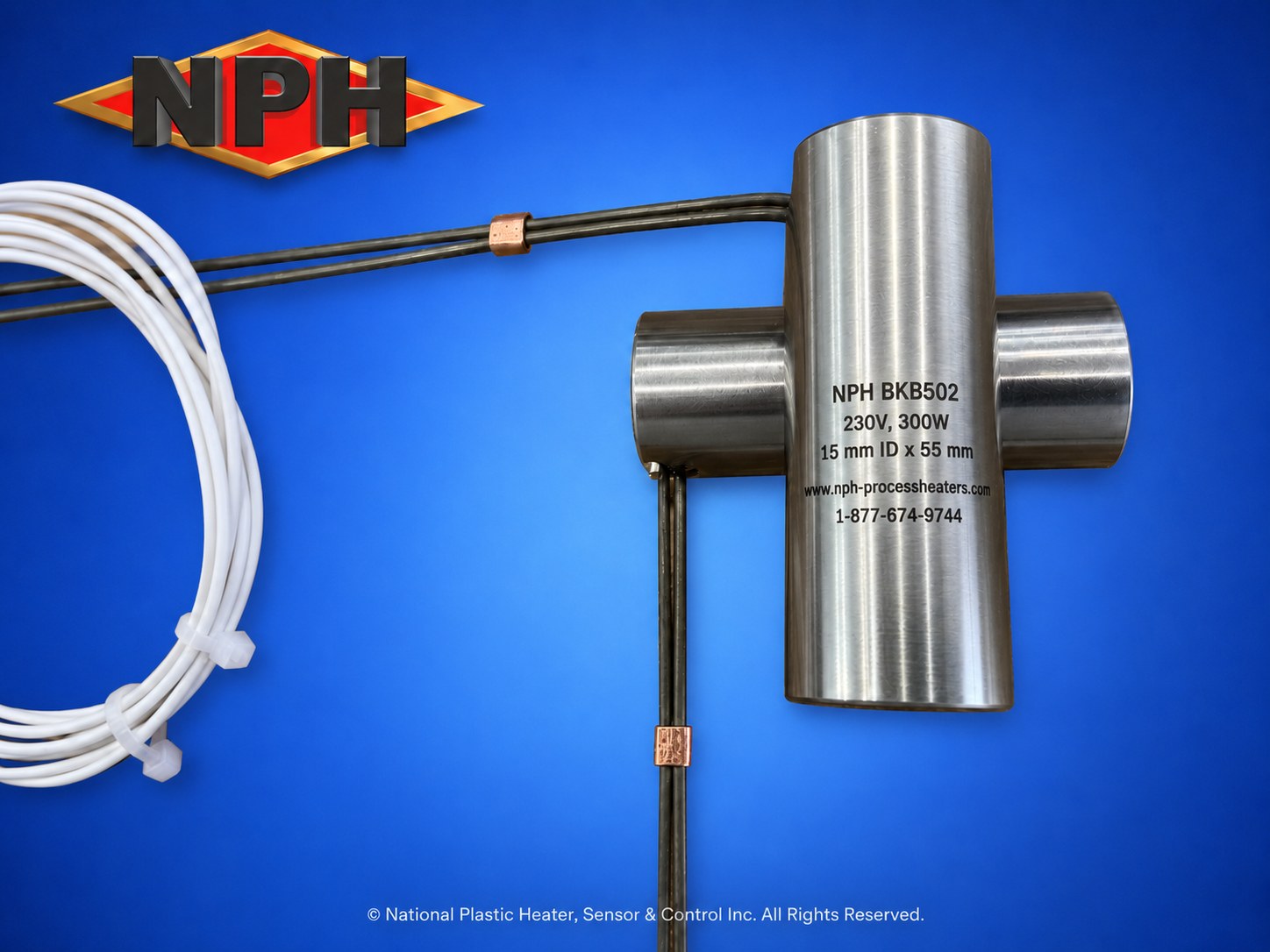
NPH_BKB502_coil_heater_blue_background
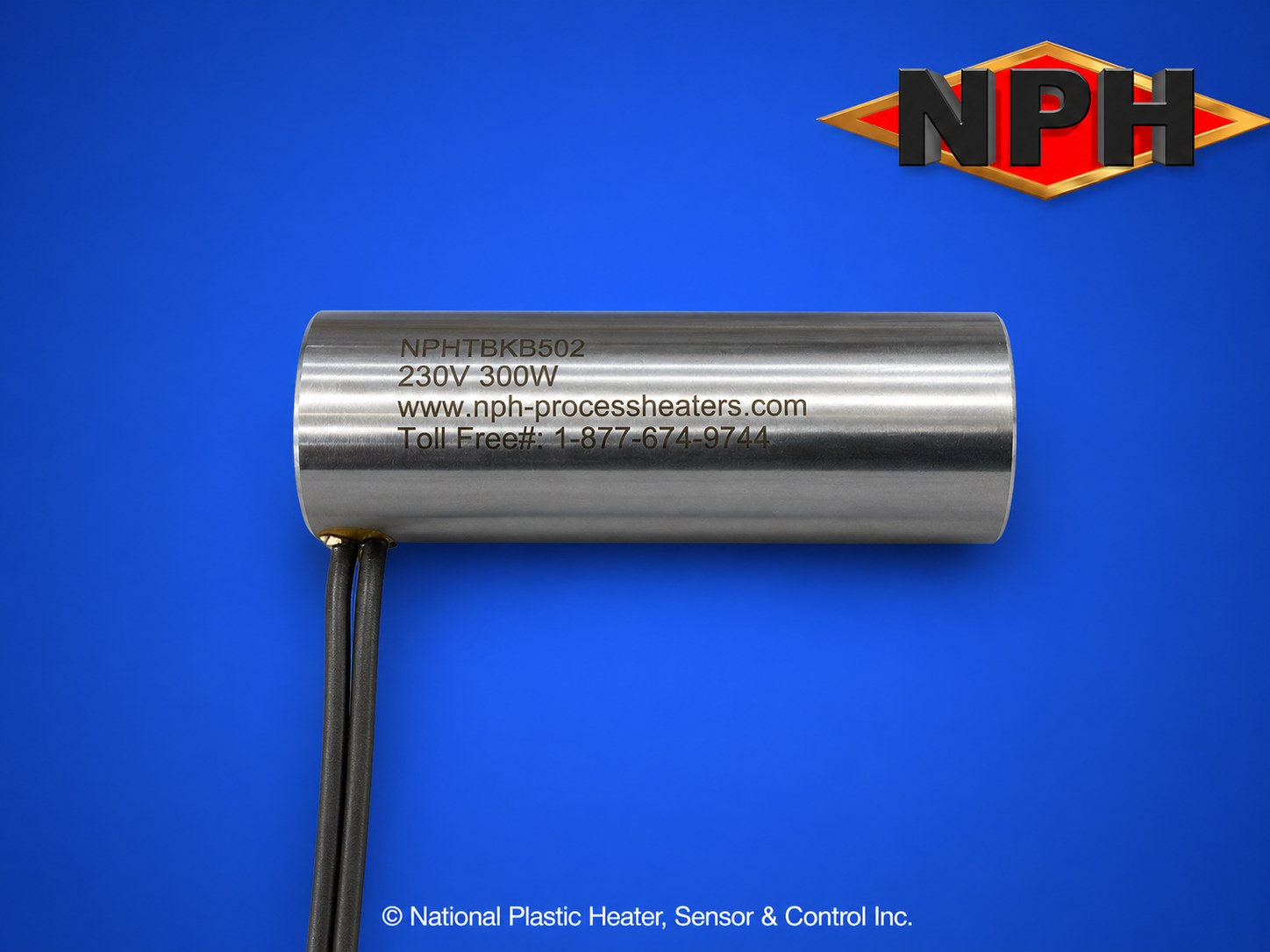
NPH Mini Pressed in Brass Coil Heater-15 mm ID x 55 mm with Overall S.Steel Sheath
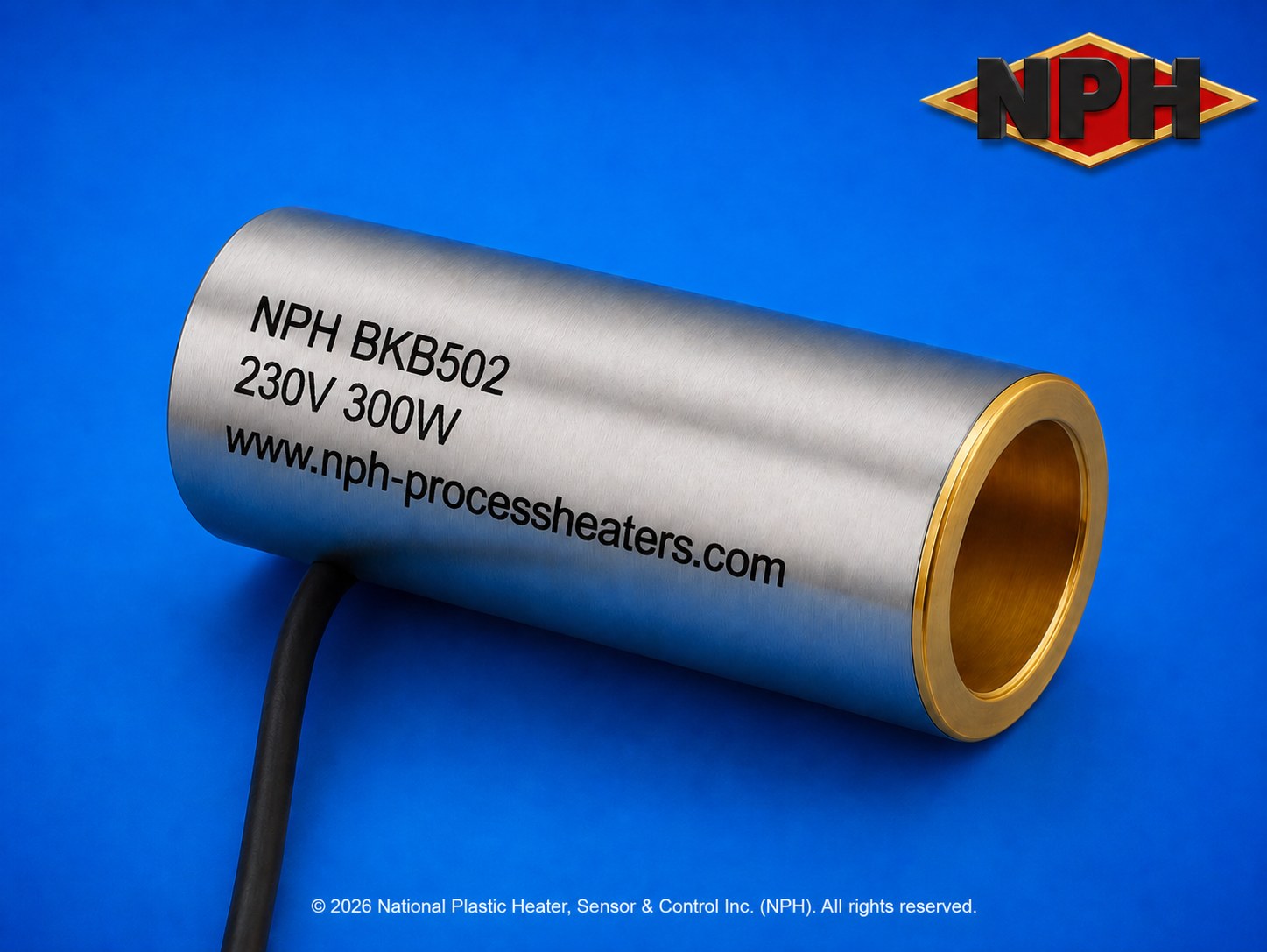
NPH Pressed in Brass Coil Heater with S.Steel Overall Slleve BKB502
How To Order Coil Heaters


We Ship Our Kapton & Process Heaters To OEM’s & Industry World Wide