


Plastic Industry Thermocouples & RTD's Guide
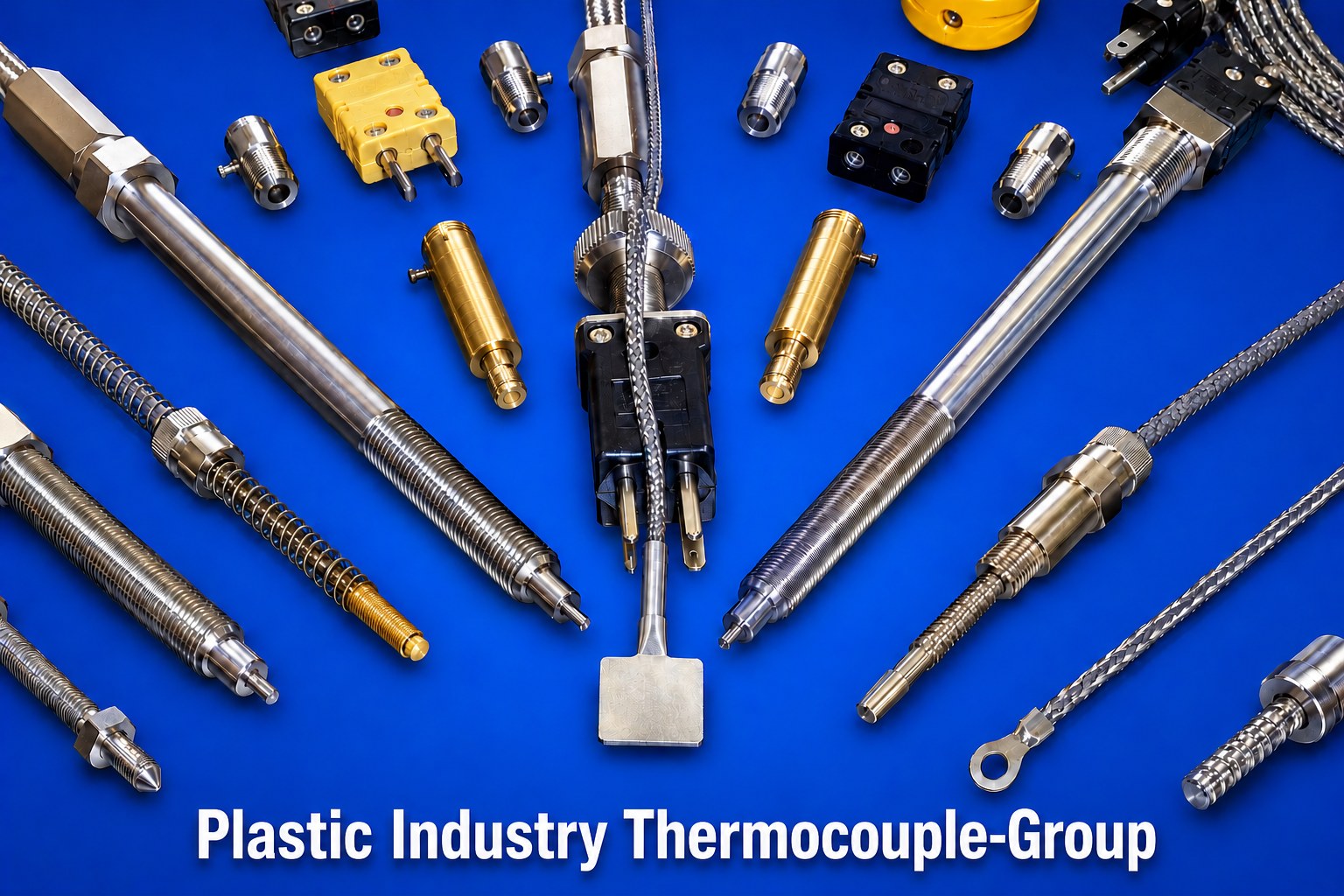
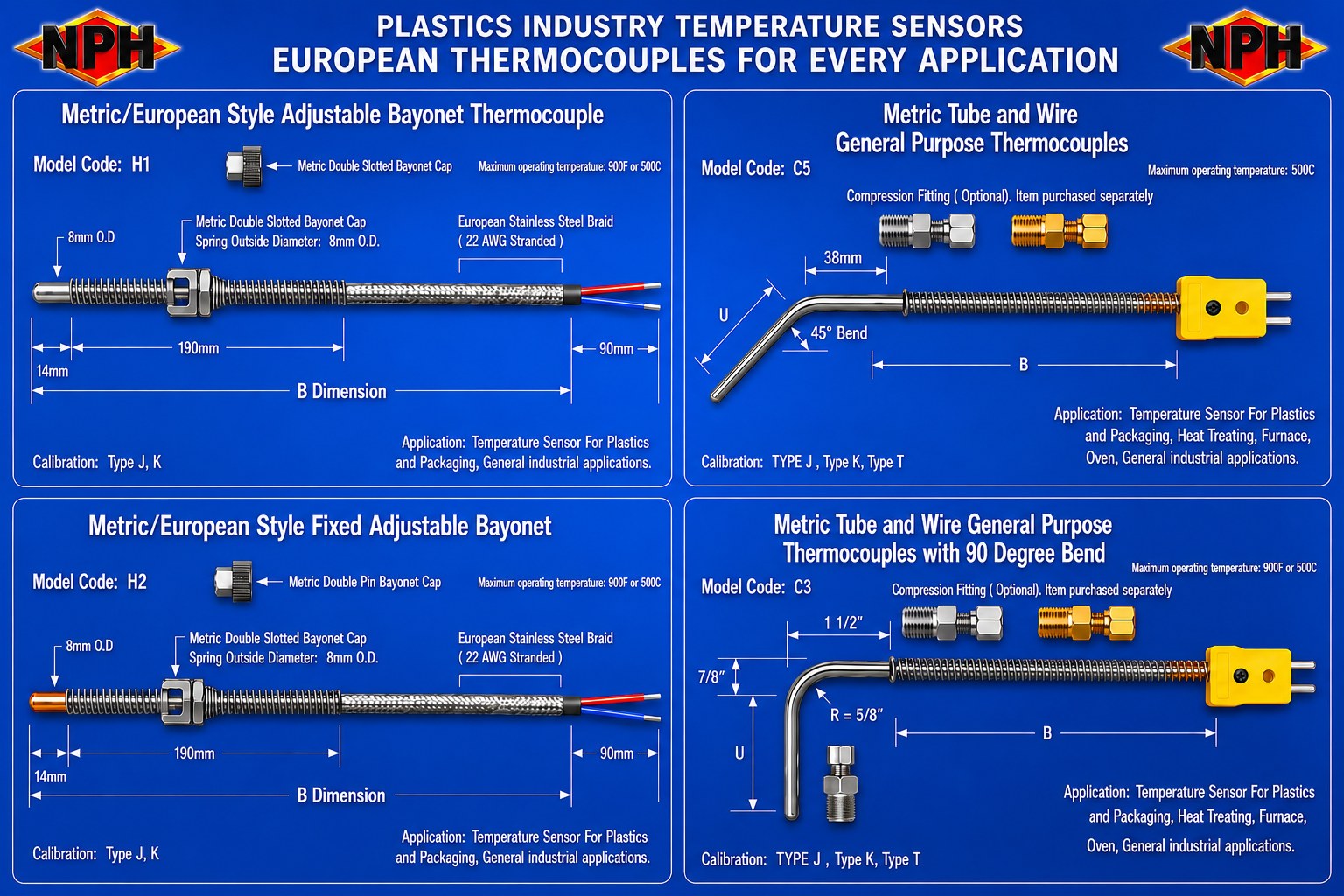
Industrial Temperature Sensors, Thermocouples and RTD Sensors for the Plastics Industry
Accurate temperature control is critical throughout the plastics manufacturing industry. From extrusion and injection molding to blow molding, thermoforming, hot runner systems and packaging equipment, industrial temperature sensors ensure process stability, repeatable product quality and efficient energy use. Industrial thermocouples and RTD sensors are widely used across plastics processing machinery because they provide precise temperature feedback in demanding high-heat environments.
What Are Industrial Thermocouples and RTD Sensors?
Thermocouples are among the most commonly used temperature sensors in plastics manufacturing due to their fast response time, durability and wide operating temperature range. A thermocouple is manufactured by joining two dissimilar metal conductors together at a sensing junction. When exposed to heat, the junction produces a small electrical voltage proportional to temperature. Common thermocouple calibrations used in the plastics industry include Type J, Type K, Type T and Type E.
RTD sensors, commonly referred to as resistance temperature detectors, operate differently from thermocouples. RTDs measure temperature based on the predictable resistance change of a metal element, typically platinum. The most common RTD used in industrial plastics processing is the PT100 platinum RTD sensor. RTDs are valued for their excellent accuracy, long-term stability and repeatability, particularly in applications requiring tighter process control.
How Thermocouples and RTDs Are Manufactured
Industrial thermocouples are manufactured using precision alloys, mineral insulated cable, stainless steel sheathing, ceramic insulation or high-temperature fiberglass and stainless steel braided lead wire. Depending on the application, thermocouples may be manufactured as bayonet thermocouples, ring terminals, melt bolt thermocouples, nozzle thermocouples, shim thermocouples, pipe clamp assemblies, adjustable immersion probes or surface sensors.
RTD sensors are manufactured using precision platinum elements encapsulated in stainless steel probes, mineral insulated assemblies or compact sensor housings designed for industrial environments. Available configurations include 2-wire, 3-wire and 4-wire RTD designs depending on the required measurement accuracy and electrical compensation requirements.
Temperature Sensor Applications in the Plastics Industry
The plastics industry uses thermocouples and RTD temperature sensors in virtually every stage of production. Common applications include:
Injection Molding and Extrusion Temperature Monitoring
Accurate temperature sensing directly affects resin flow, melt consistency, cycle time, product appearance and overall manufacturing efficiency. Poor temperature control can result in scrap, dimensional instability, material degradation, burn marks and inconsistent product quality.
Bayonet thermocouples allow adjustable insertion depth for optimized sensing location, while melt bolt thermocouples provide accurate internal melt temperature readings inside extruders and molding systems.
Benefits of Industrial Thermocouples and RTD Sensors
Industrial thermocouples offer several important advantages for plastics processing applications. Their fast response time allows rapid thermal correction during changing production conditions. Mineral insulated thermocouples provide excellent vibration resistance and long operating life in high-temperature industrial environments.
RTD sensors provide superior measurement accuracy and stability for applications requiring precise temperature control. Platinum RTDs are particularly effective in closed-loop process control systems where repeatability and long-term calibration stability are essential.
Custom Temperature Sensor Solutions for Plastics Processing
Modern plastics industry temperature sensors are available with numerous sheath materials, mounting configurations, lead wire options and termination styles. Stainless steel sheaths provide corrosion resistance and mechanical durability, while fiberglass, Kapton®, PTFE and stainless steel braided leads protect sensor wiring in high-temperature operating environments.
Sensors may also be supplied with compression fittings, spring-loaded assemblies, quick disconnect plugs, miniature connectors or custom terminations for OEM equipment integration.
Choosing the Correct Temperature Sensor for Plastics Manufacturing
Selecting the proper industrial temperature sensor depends on several factors including operating temperature range, response time requirements, mounting style, chemical exposure, vibration levels and control system compatibility. Proper sensor placement is equally important to ensure accurate process feedback and stable temperature control.
High-quality thermocouples and RTD sensors help plastics manufacturers improve process consistency, reduce downtime, minimize scrap and extend equipment life. Custom-engineered temperature sensors designed specifically for plastics processing applications provide improved reliability and long-term performance under demanding industrial operating conditions.
For plastics processors, OEM machinery manufacturers and industrial heating system integrators, precision temperature sensing remains one of the most important components in achieving efficient, repeatable and high-quality plastics manufacturing operations.

- Injection molding machines
- Extrusion equipment
- Blow molding machinery
- Thermoforming equipment
- Hot runner systems
- Melt temperature monitoring
- Plastic processing nozzles
- Packaging equipment
- Heat sealing equipment
- Mold temperature monitoring
- Barrel temperature monitoring
- Die temperature monitoring

- Industries, Applications & Related Markets
- Plastics Processing
- Injection Molding
- Extrusion
- Blow Molding
- Thermoforming
- Packaging
- Medical Plastics
- Automotive Plastics
- Electronics Manufacturing
- Food Packaging
- Pharmaceutical Manufacturing
- OEM Machinery Builders
- Laboratory Equipment
Technical Resources & Downloads
 Plastic-Industry-Thermocouples & How Thermocouples Work.pdf
International Thermocouple Color Codes.pdf
Temperature Ranges-International Thermocouple Color Codes.pdf
Temperature-Sensors-Which One-to-Choose-From.pdf
Evaluating Sensor Placement In a Thermal System.pdf
Plastics Industry Thermocouples & RTD Temperature Sensors-FAQs
What type of thermocouple is most commonly used in plastics processing?
 What type of thermocouple is most commonly used in plastics processing?
Type J and Type K thermocouples are the most common temperature sensors used in plastics extrusion, injection molding, thermoforming and blow molding applications. Type J remains widely used for many plastics processing applications, while Type K is often selected for higher temperature processes.
What is the difference between a thermocouple and an RTD?
Thermocouples offer fast response, rugged construction and wide temperature ranges. RTDs generally provide higher accuracy and repeatability but are often more sensitive to vibration and mechanical abuse.
Where are thermocouples used on injection molding machines?
Thermocouples are commonly used on nozzles, hot runner systems, manifolds, molds, barrel zones and melt temperature measurement points throughout injection molding equipment.
What is a bayonet thermocouple?
A bayonet thermocouple is a spring-loaded sensor designed to maintain positive contact with a heated surface. They are widely used on injection molding machine nozzles and barrel heaters because they provide fast response and reliable temperature monitoring.
What is a melt bolt thermocouple?
A melt bolt thermocouple is designed to measure the actual temperature of molten plastic within an extruder barrel, adapter or die rather than measuring only the surrounding metal temperature.
Should I choose Type J or Type K thermocouples?
Type J thermocouples are commonly used throughout plastics processing and extrusion applications. Type K thermocouples are often preferred for higher temperature applications and engineering resins requiring elevated processing temperatures.
How accurate are thermocouples used in plastics processing?
Accuracy depends on sensor type, calibration, installation method, sensor location, controller quality and operating environment. Properly selected and installed thermocouples provide reliable temperature measurement for most plastics processing applications.
Can thermocouples be supplied with stainless steel overbraid or armour?
Yes. Thermocouples can be supplied with stainless steel overbraid, armour cable, flexible conduit and other protective constructions to improve durability in harsh industrial environments.
What causes inaccurate thermocouple readings?
Common causes include poor sensor placement, loose connections, electrical noise, damaged lead wires, incorrect calibration settings and improper controller configuration.
How often should thermocouples be replaced?
Replacement frequency depends on operating temperature, thermal cycling, vibration, contamination and process conditions. Periodic inspection and calibration verification are recommended to maintain process accuracy.
Are European metric thermocouples available?
Yes. NPH designs and supplies metric thermocouples commonly used on European injection molding, extrusion and plastics processing equipment.
Can NPH manufacture custom thermocouples for OEM equipment?
Yes. NPH supplies custom thermocouples and RTD assemblies to customer specifications including custom lengths, probe diameters, fittings, lead wire types, terminations and temperature sensing configurations.
Plastics Industry Thermocouples-Configurations Guide- Below:
(Click on images to enlarge)

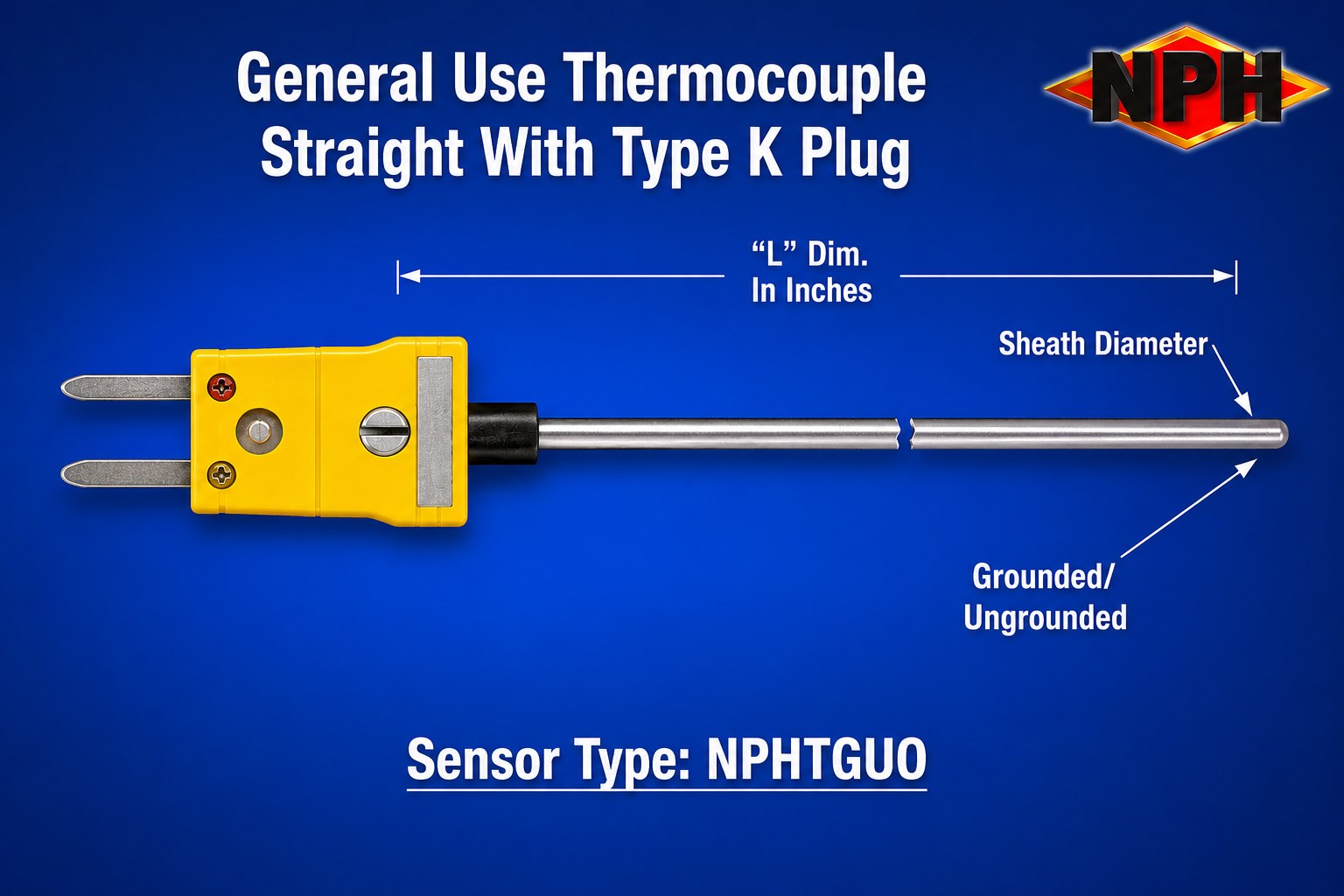
General Use Tube & Wire Thermocouple Sraight Type K
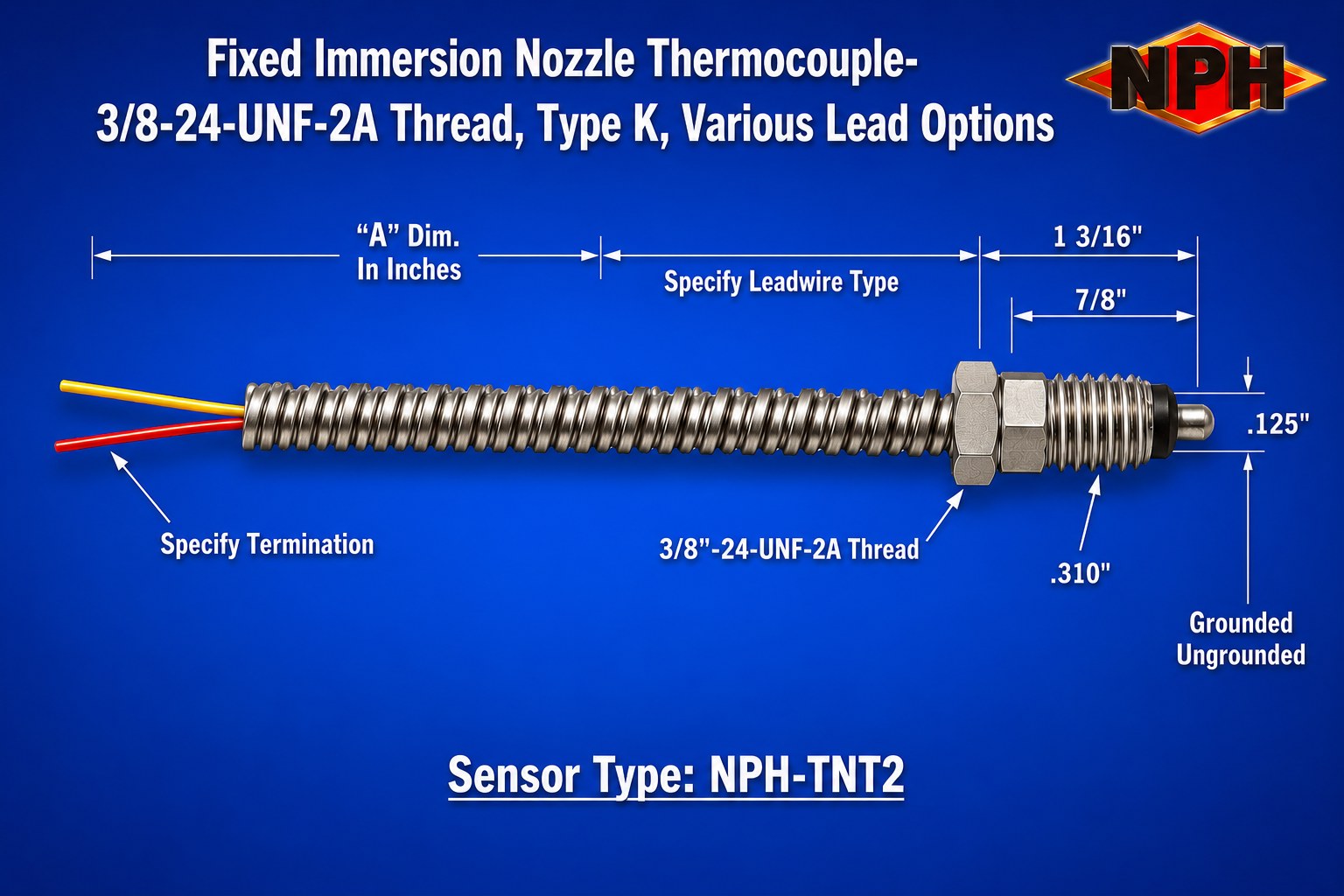
Fixed Immersion NozzleThermocouple
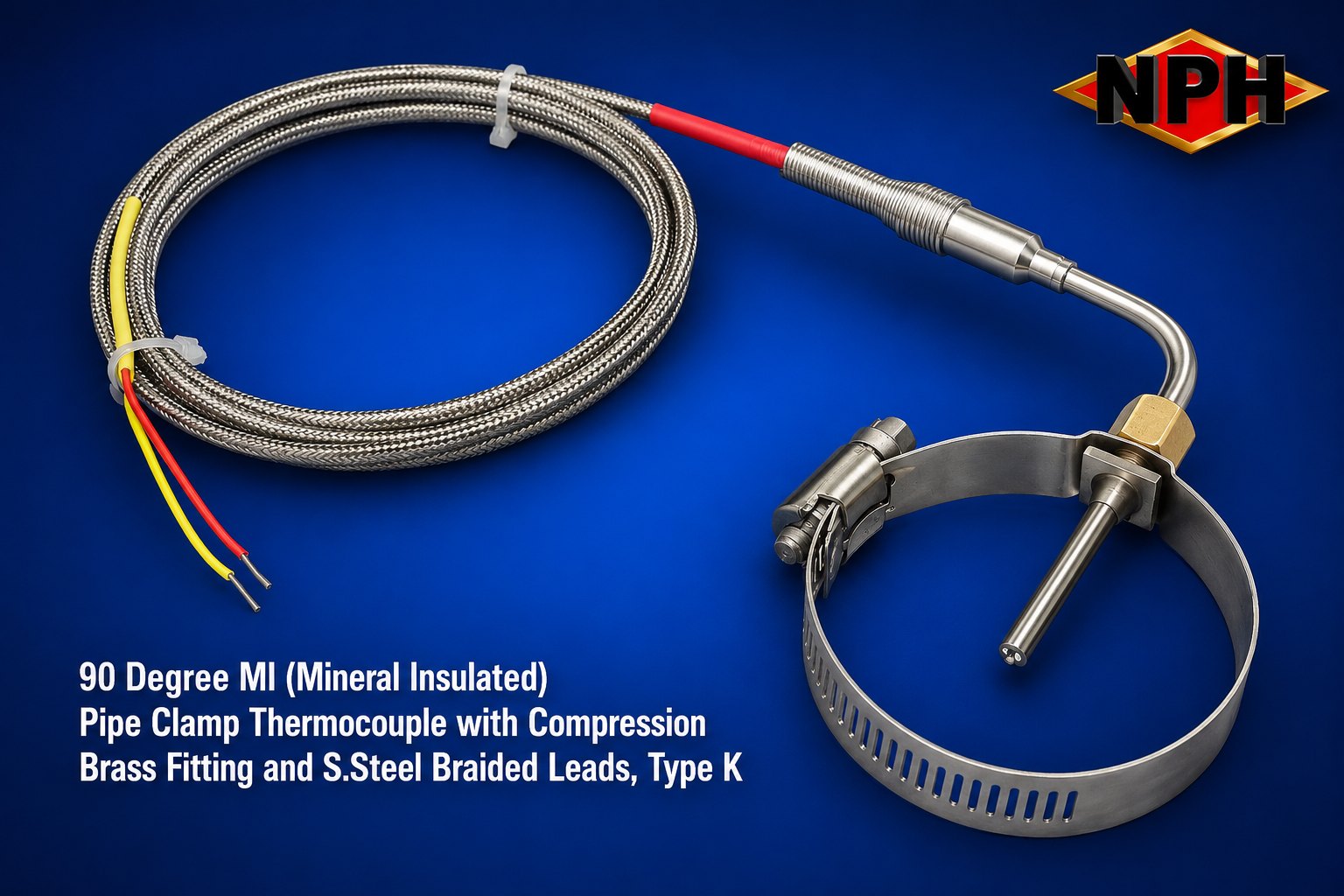
90 Degree Mineral Insulated Pipe Clamp Thermocouple with Compression Fitting, Type K
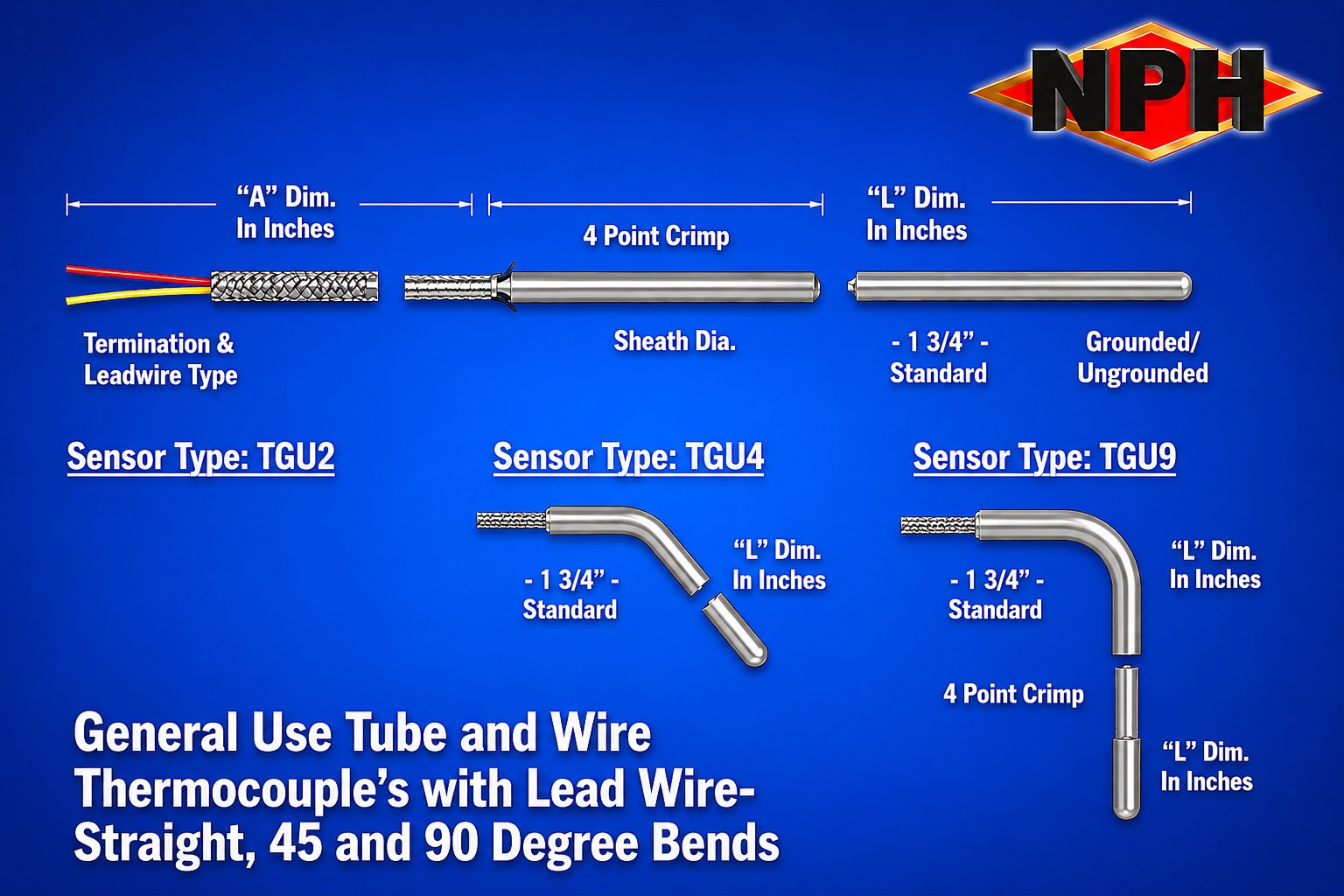
General Use Thermocouple with Probe and Lead Wire Straight 45 & 90 Bends
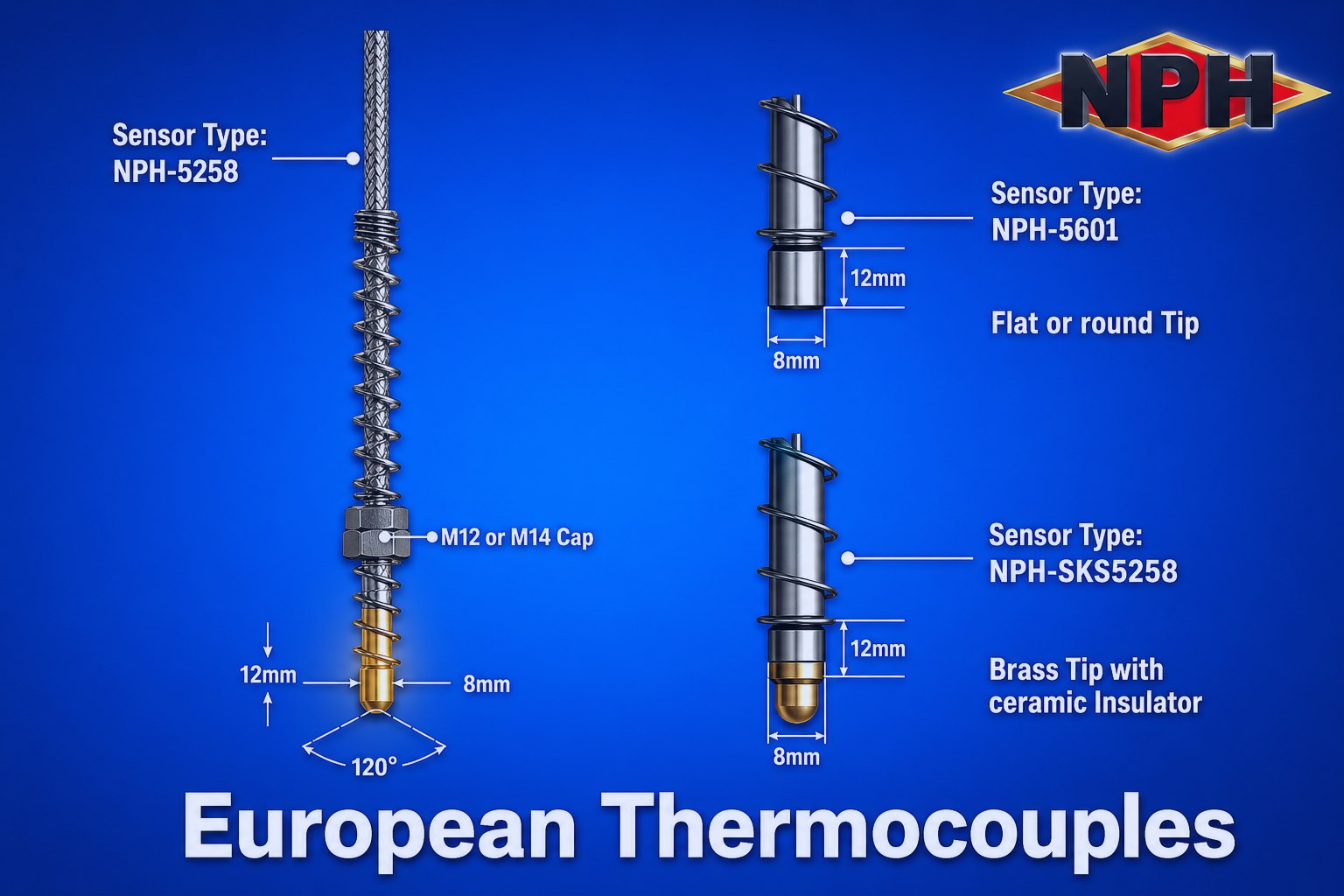
NPH Brass Tip European Thermocouples Group
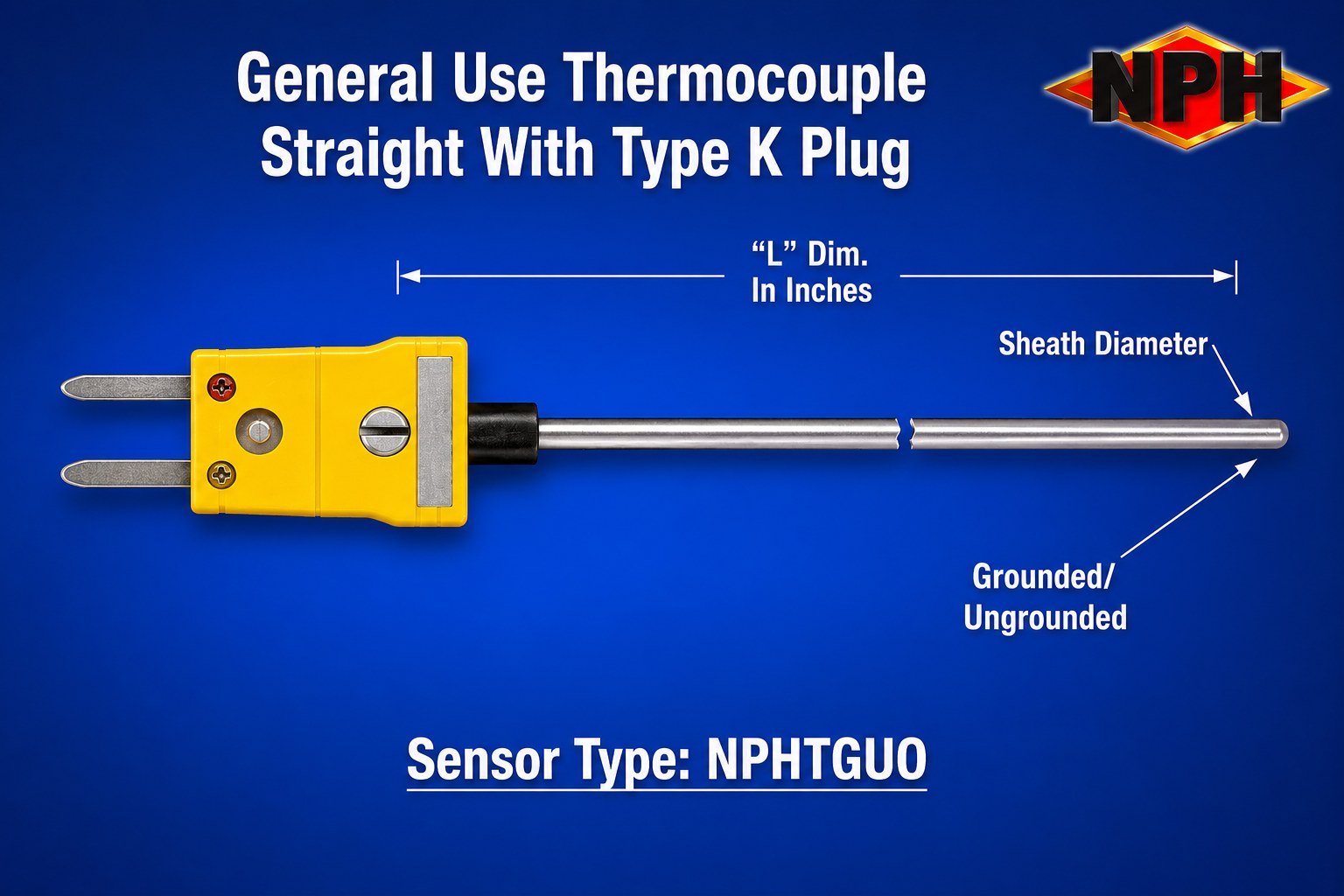
General Use Plastics Industry Tube & Wire Thermocouple TypeK
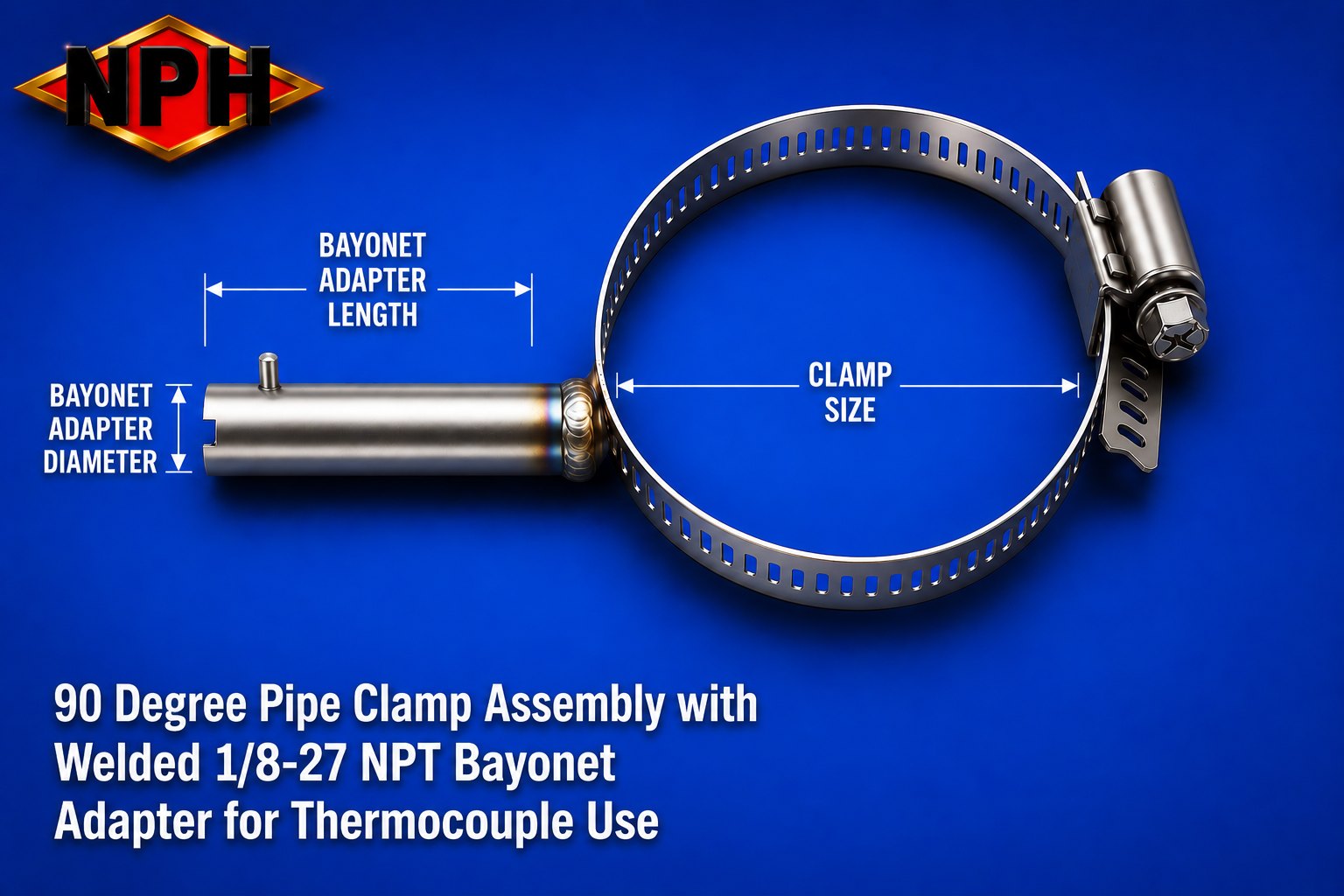
Pipe Clamp Assembly with Braised Bayonet Adapter for TC Use
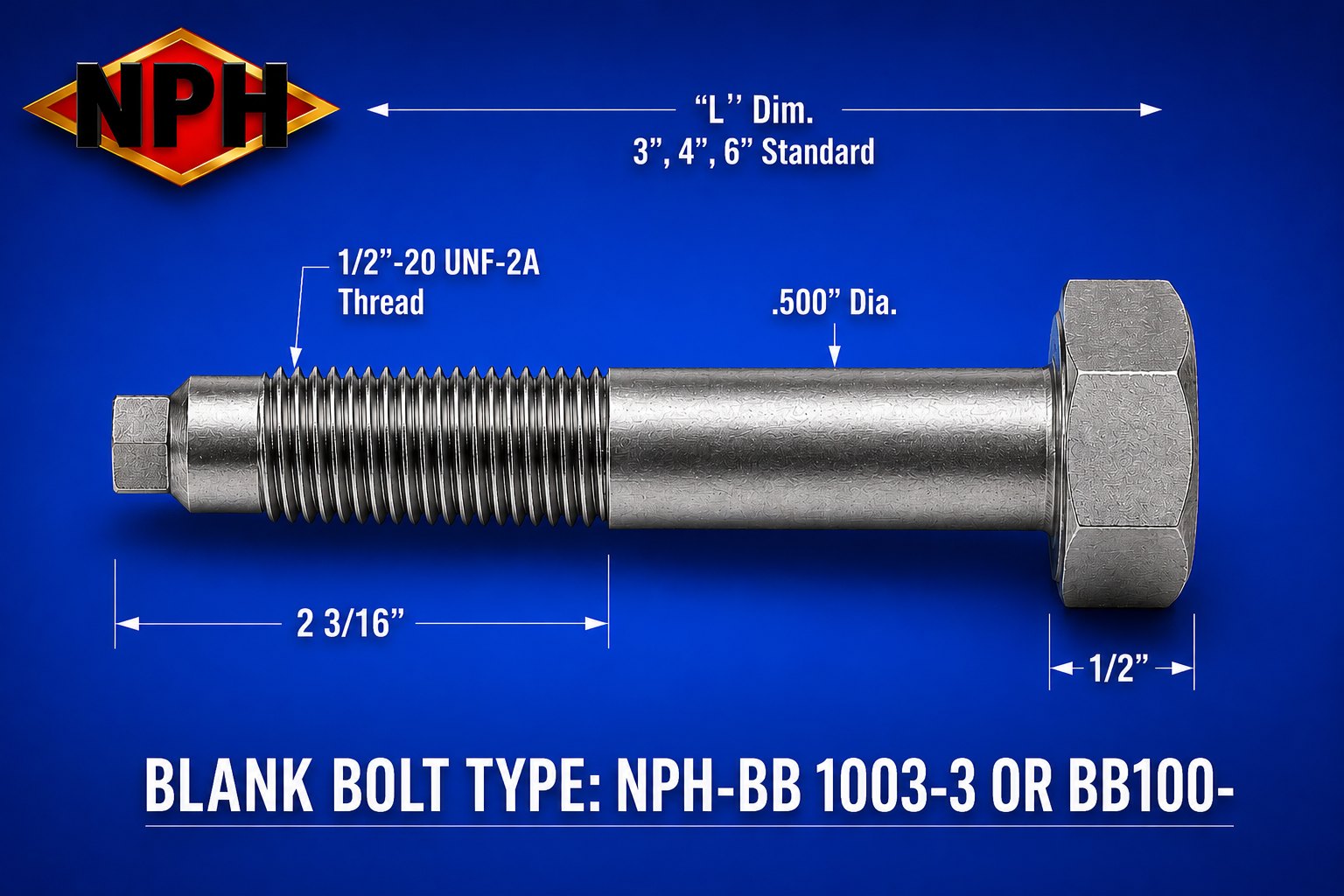
Blank Bolt, 3, 4 and 6 in. lengths
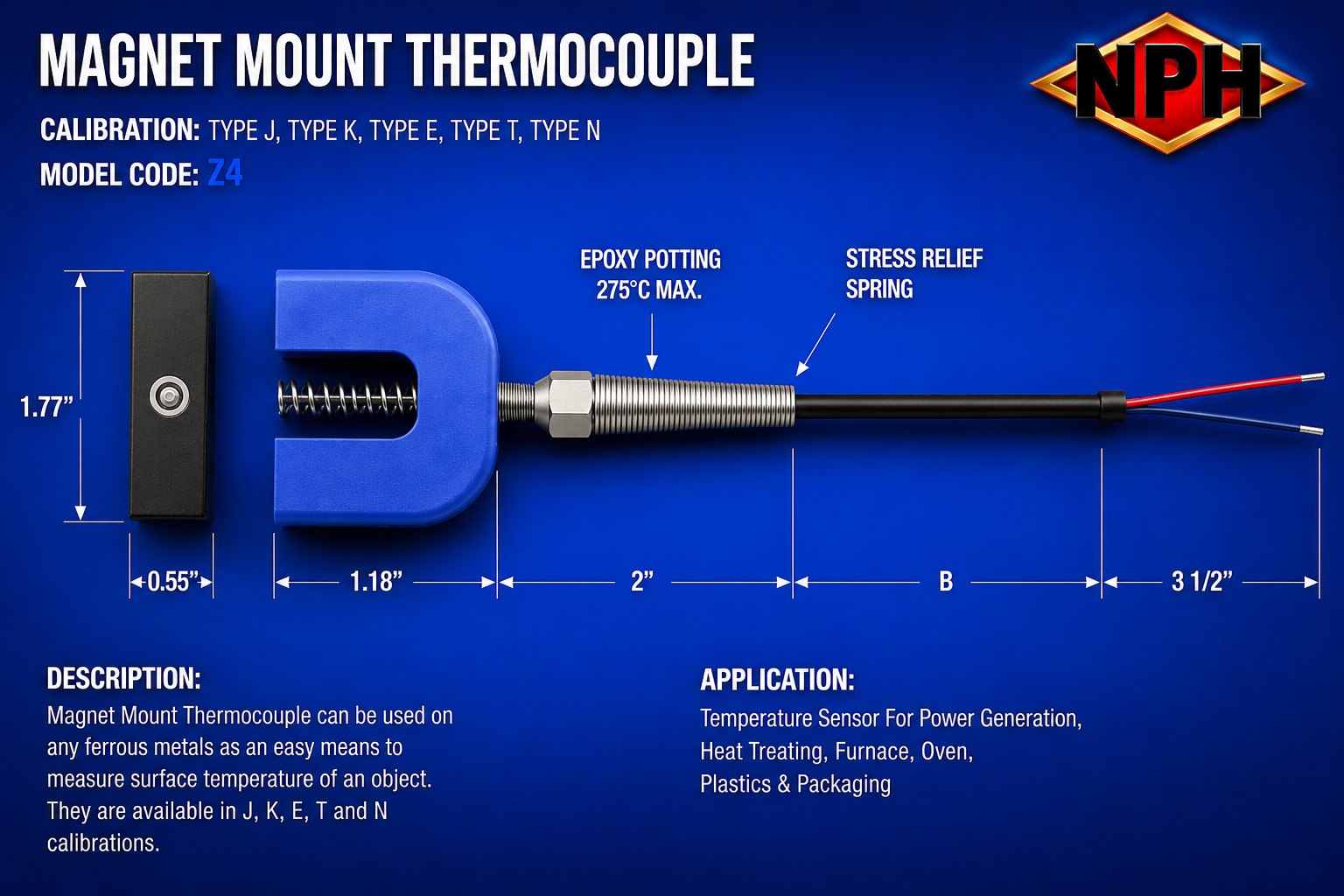
NPH Magnet Mount Thermocouple-Z4
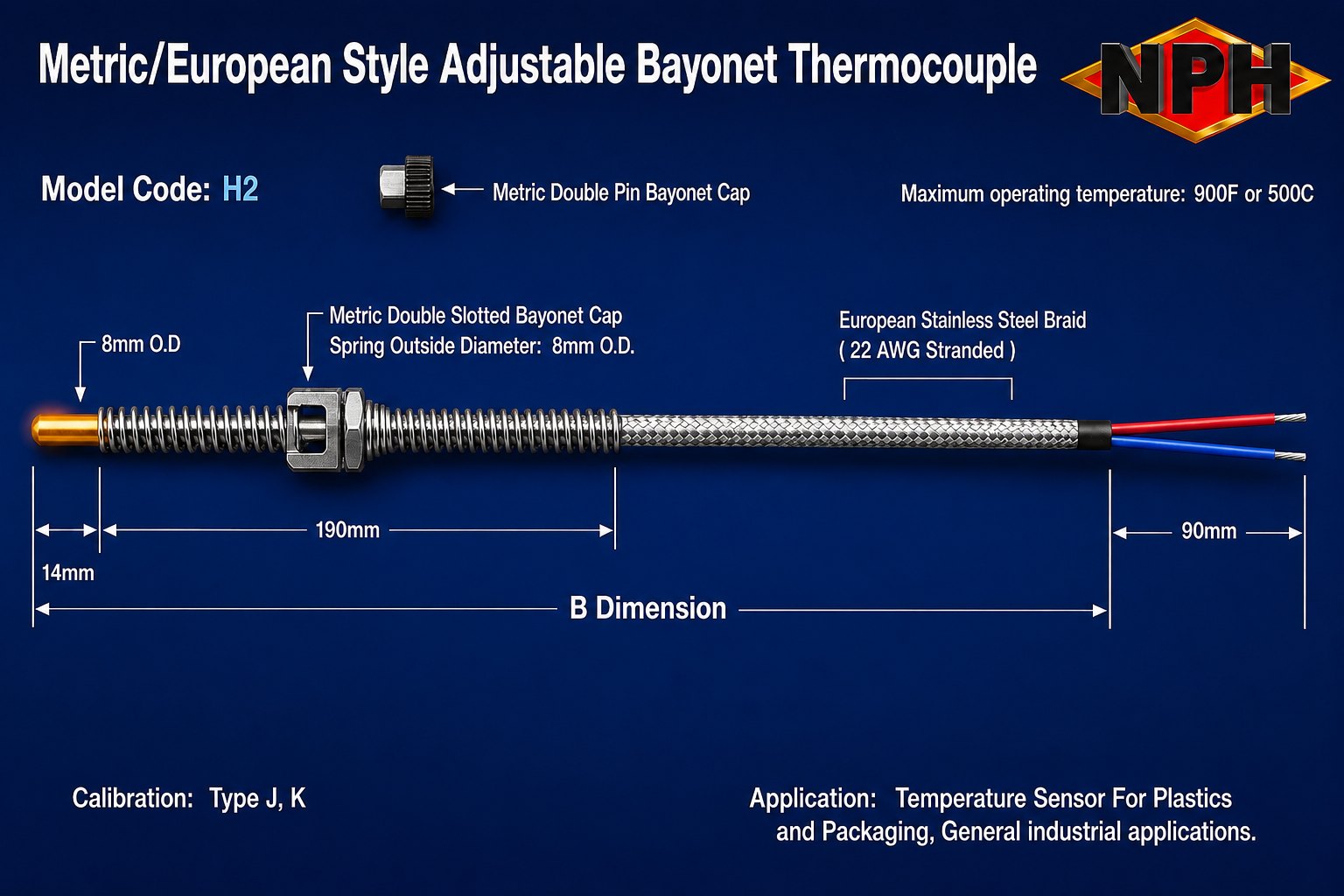
NPH European Adjustable Bayonet, Exposed Brass Tip Style-H2
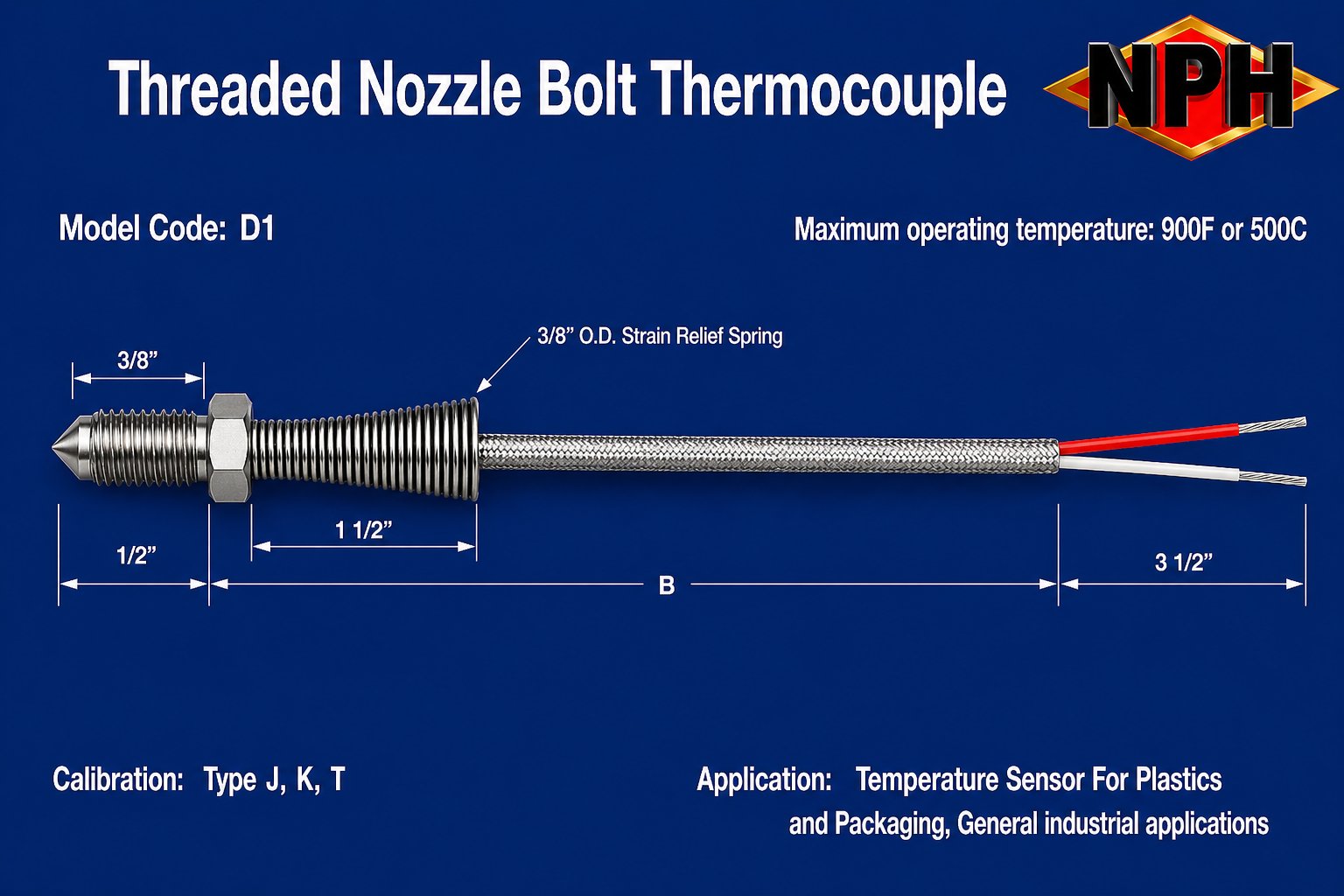
NPH Nozzle Bolt Style Thermocouple-D1
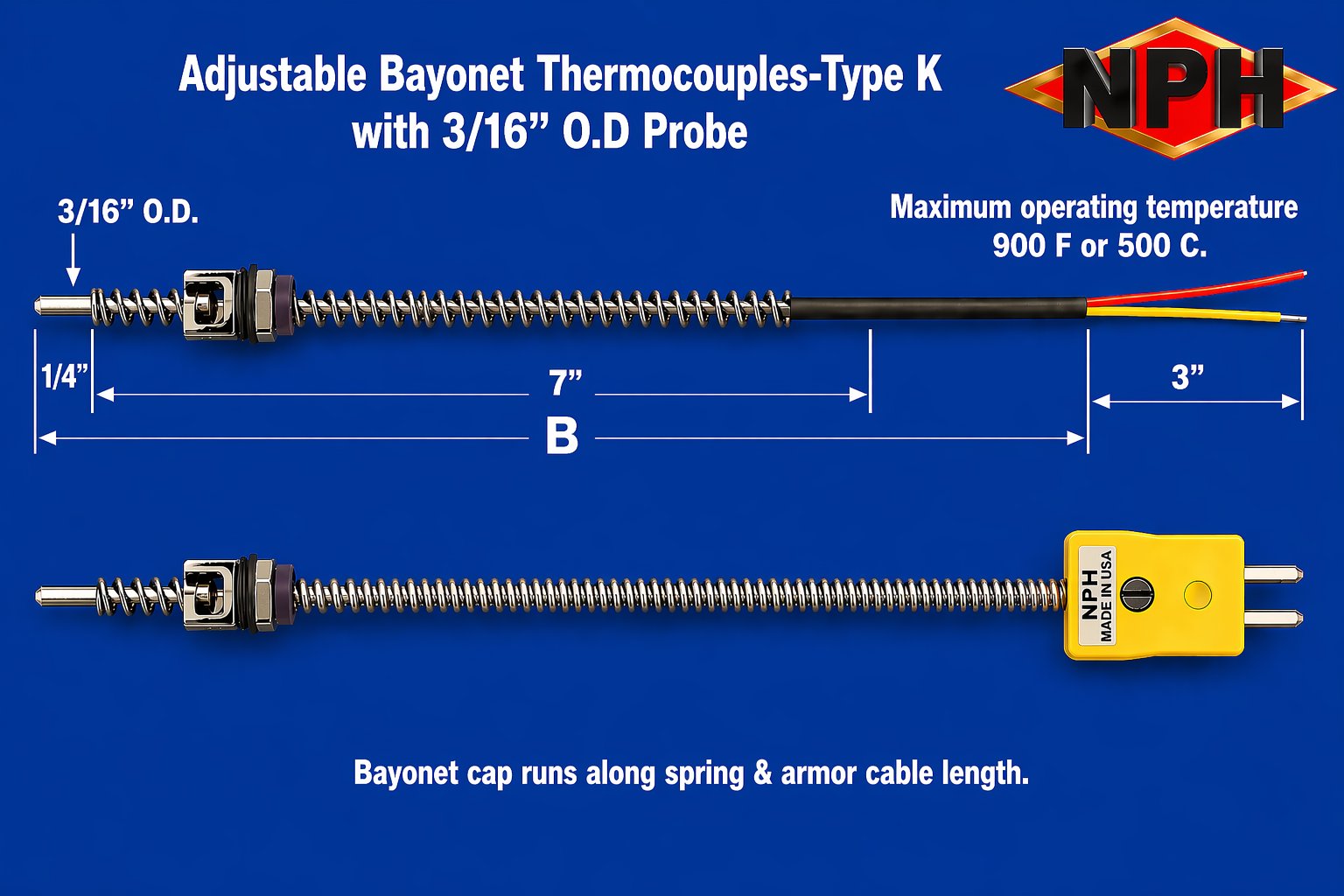
NPH Adjustable Bayonet Style Thermocouple-A2.jpg
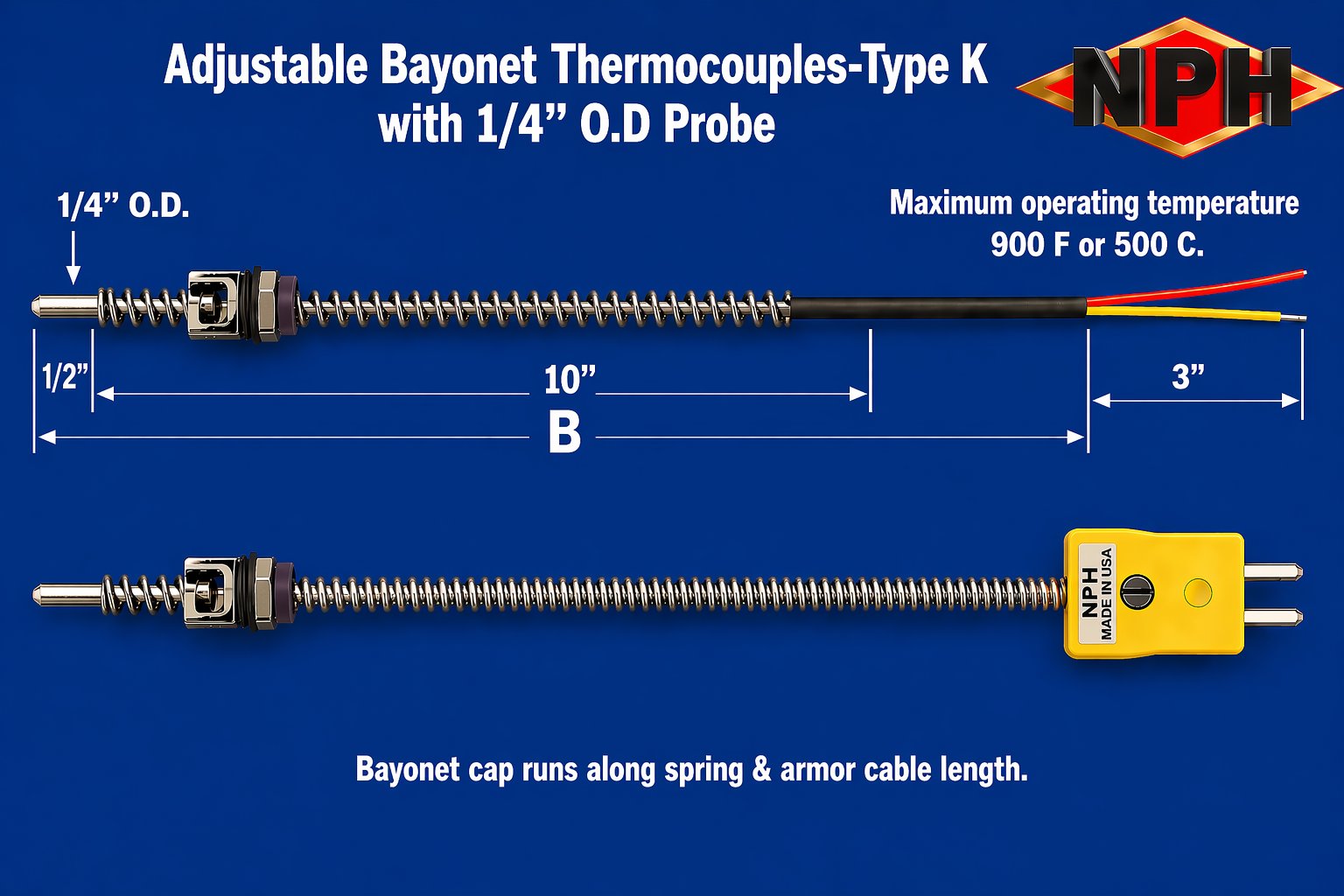
NPH Adjustable Bayonet Style Thermocouple-A3
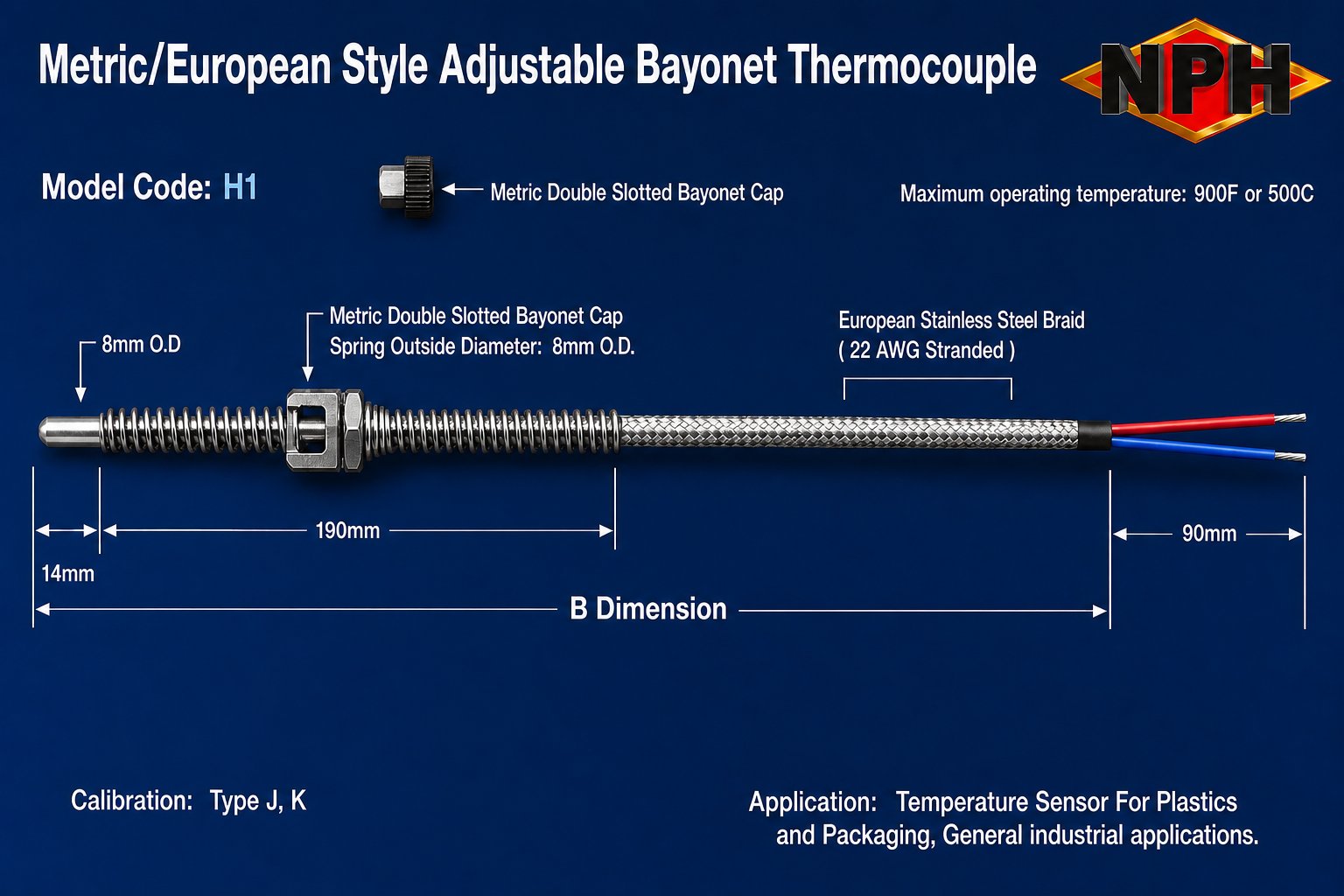
NPH European Adjustable Bayonet S.Steel Tip-H1
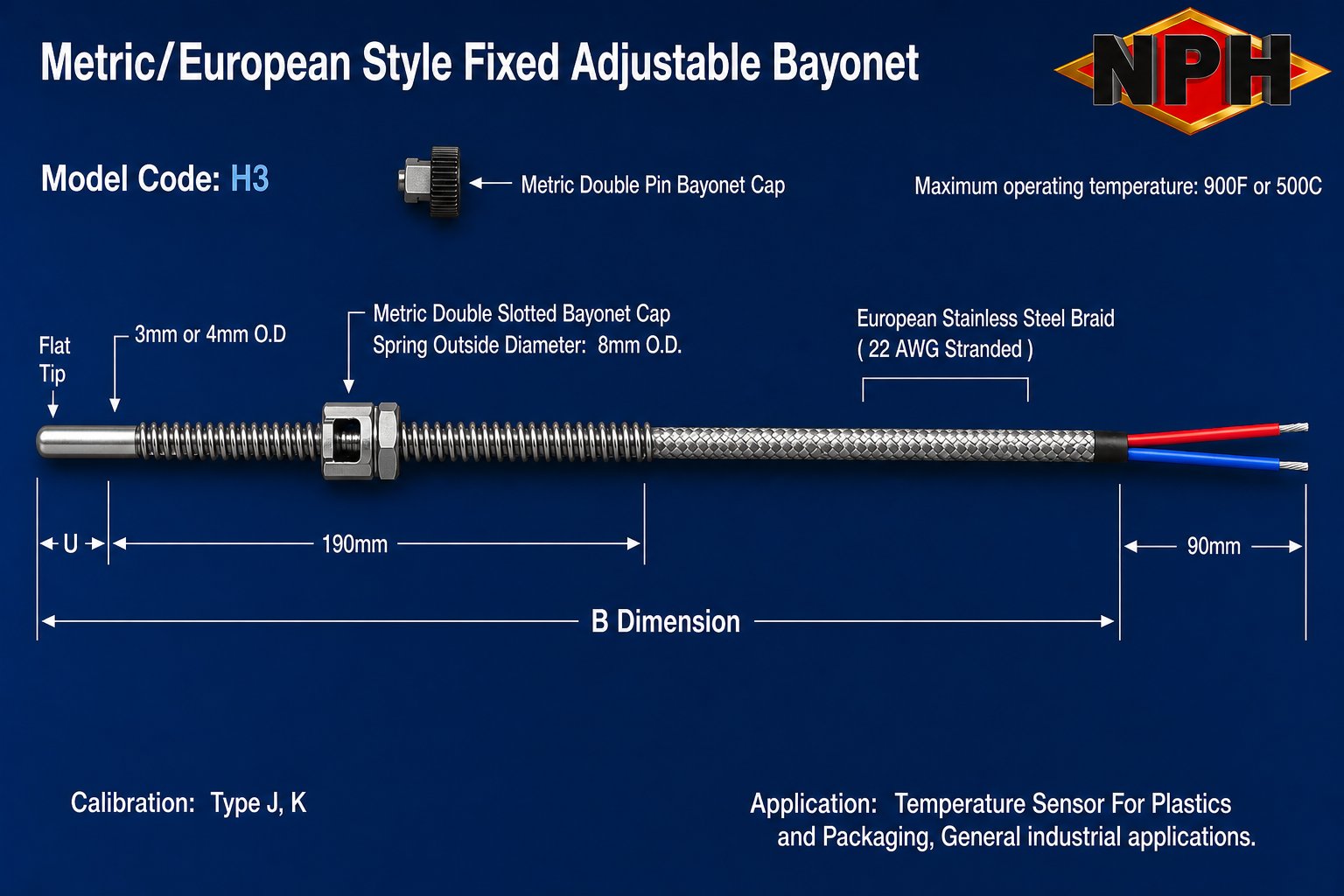
NPH European Fixed Adjustable Bayonet-H3
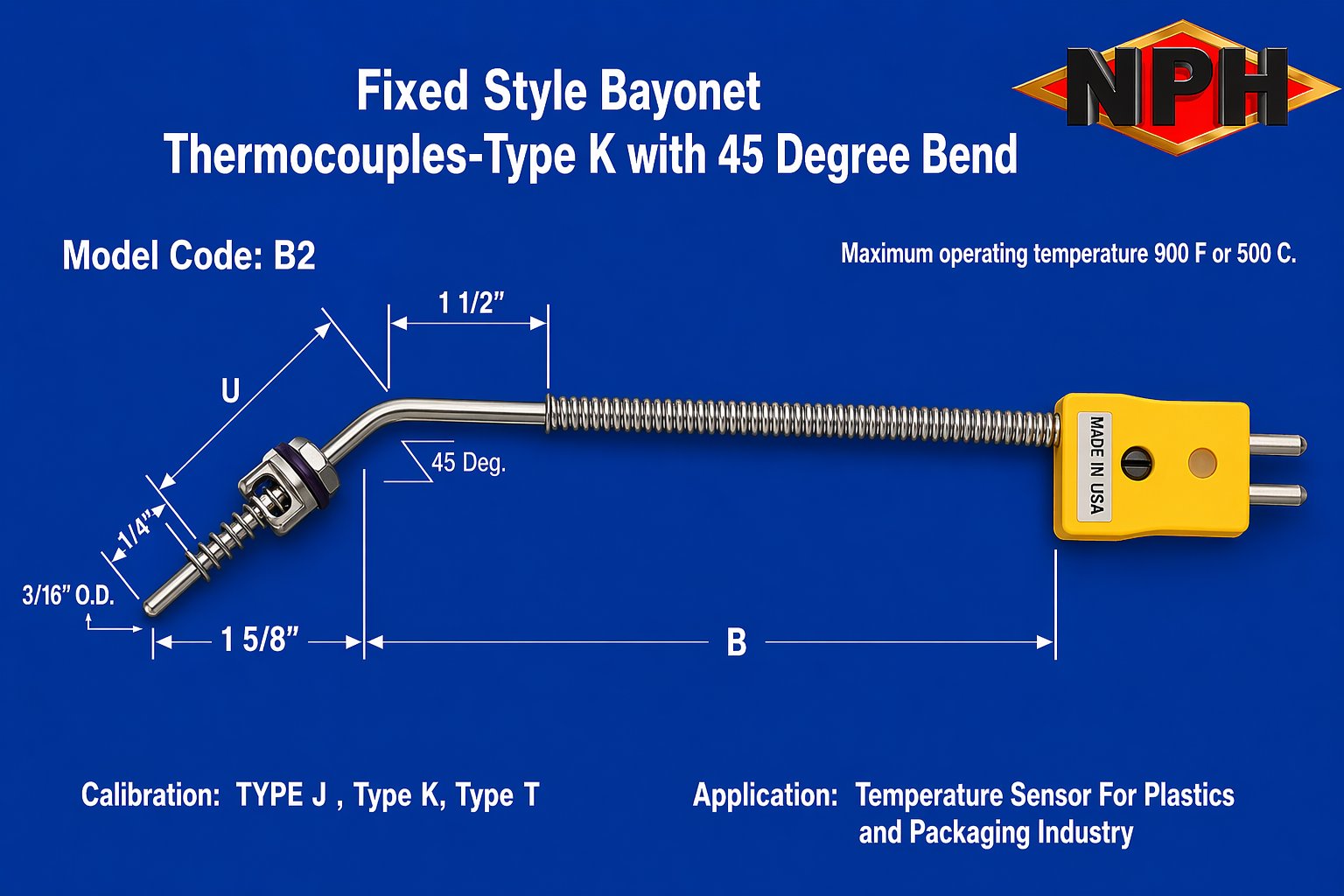
NPH Fixed Bayonet Style Thermocouple. 45 Bend-B2
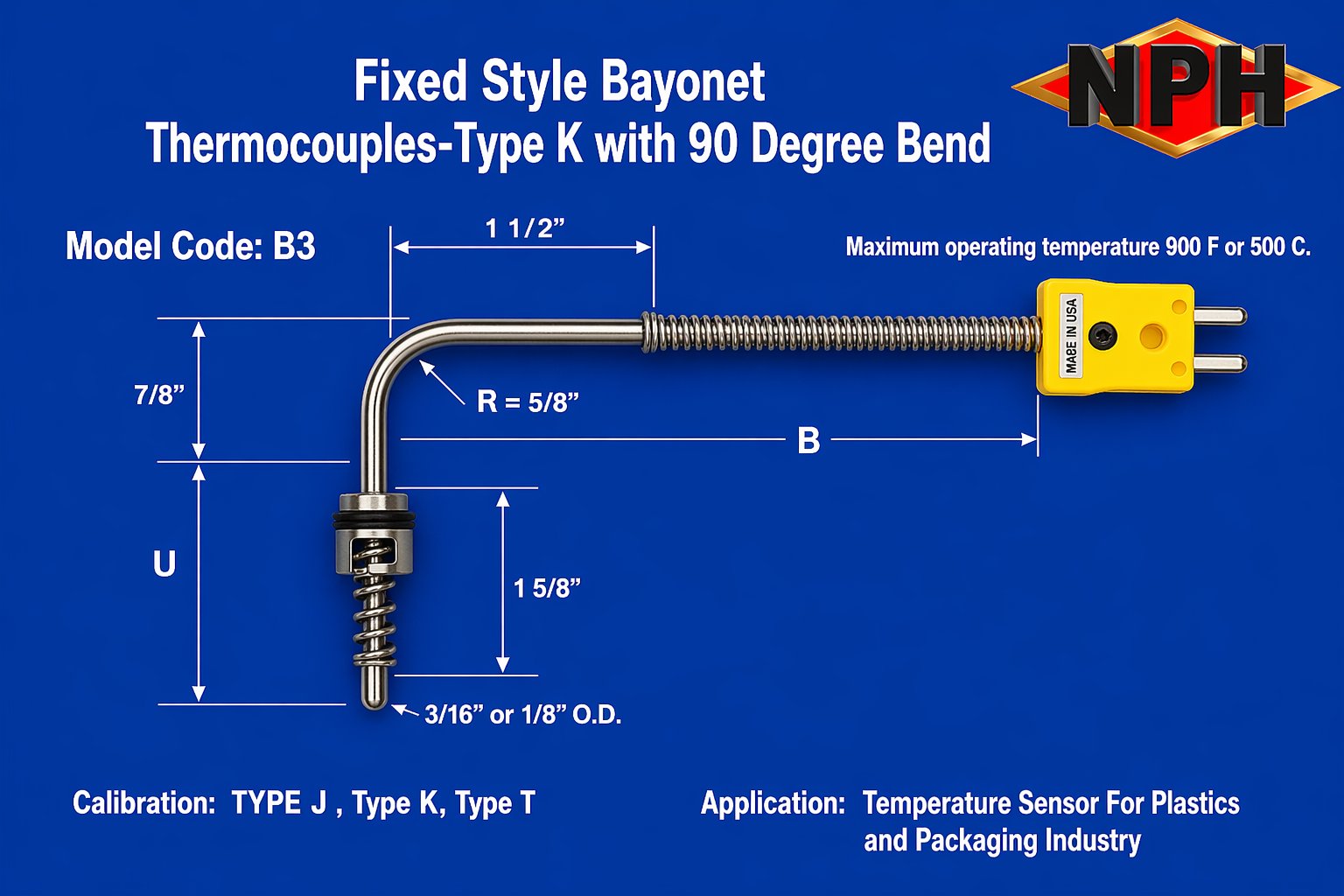
NPH Fixed Bayonet Style Thermocouple. 90 Bend-B3
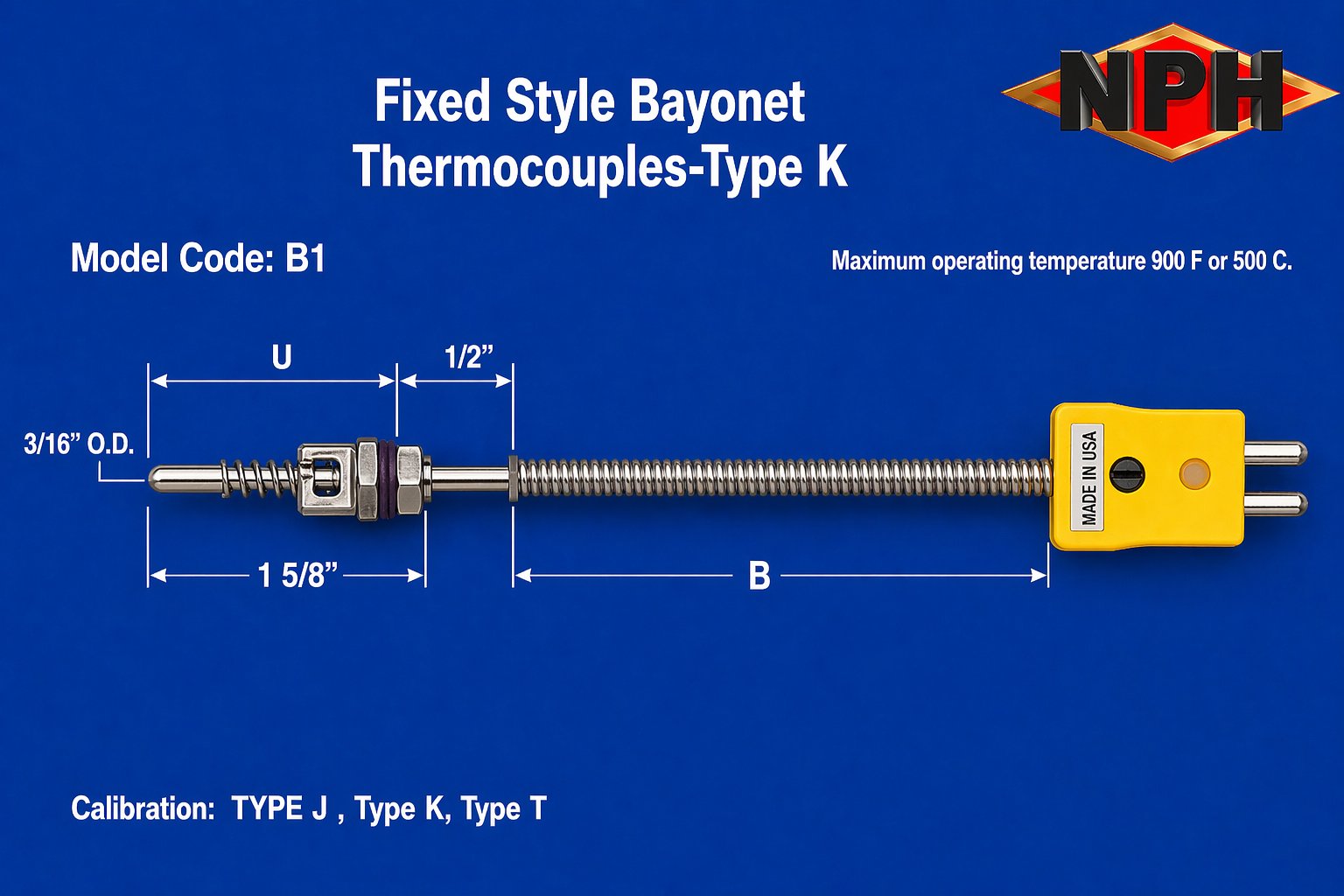
NPH Fixed Bayonet Style Thermocouple-B1
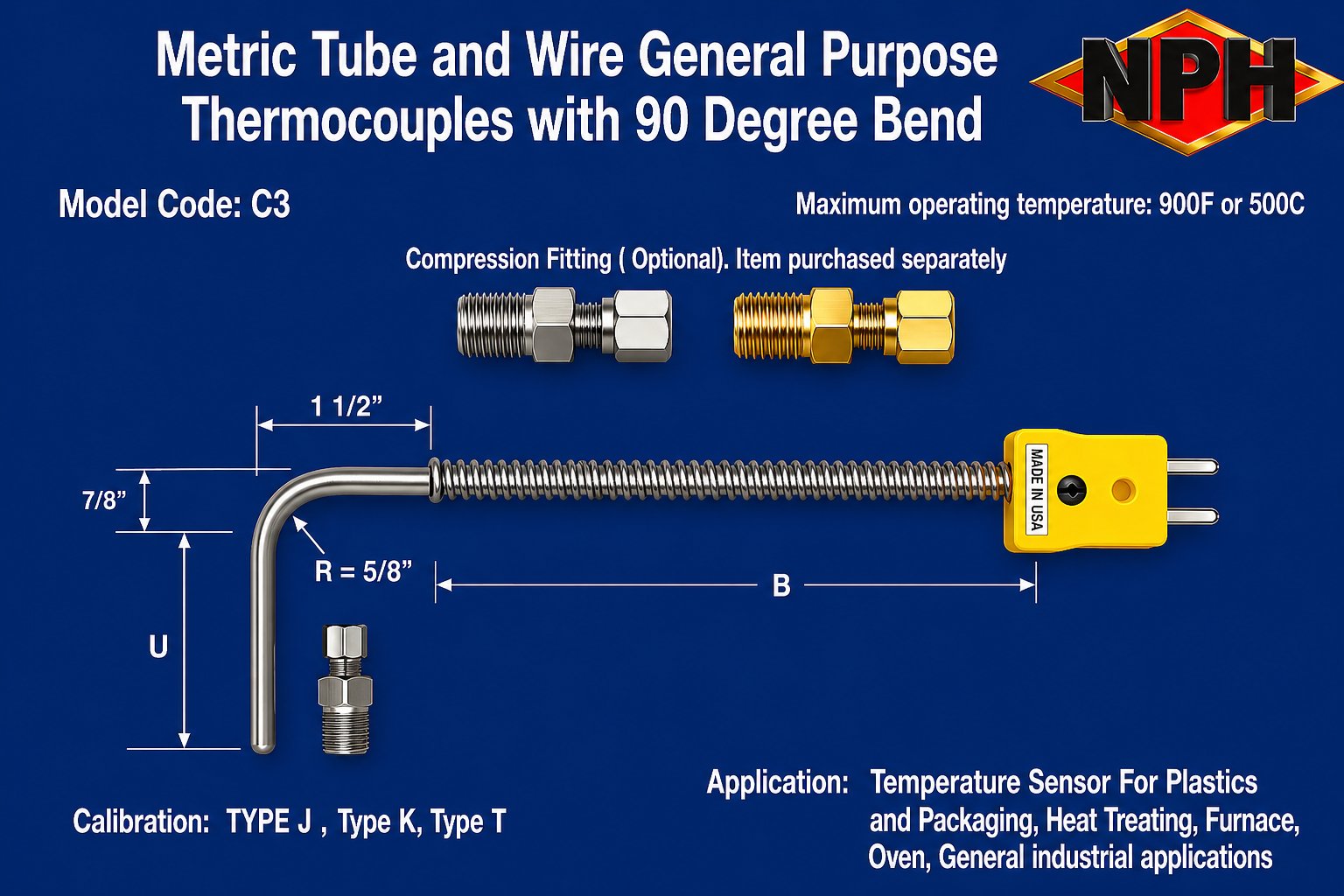
NPH Metric General Purpose Thermocouple-90 Bend-C6
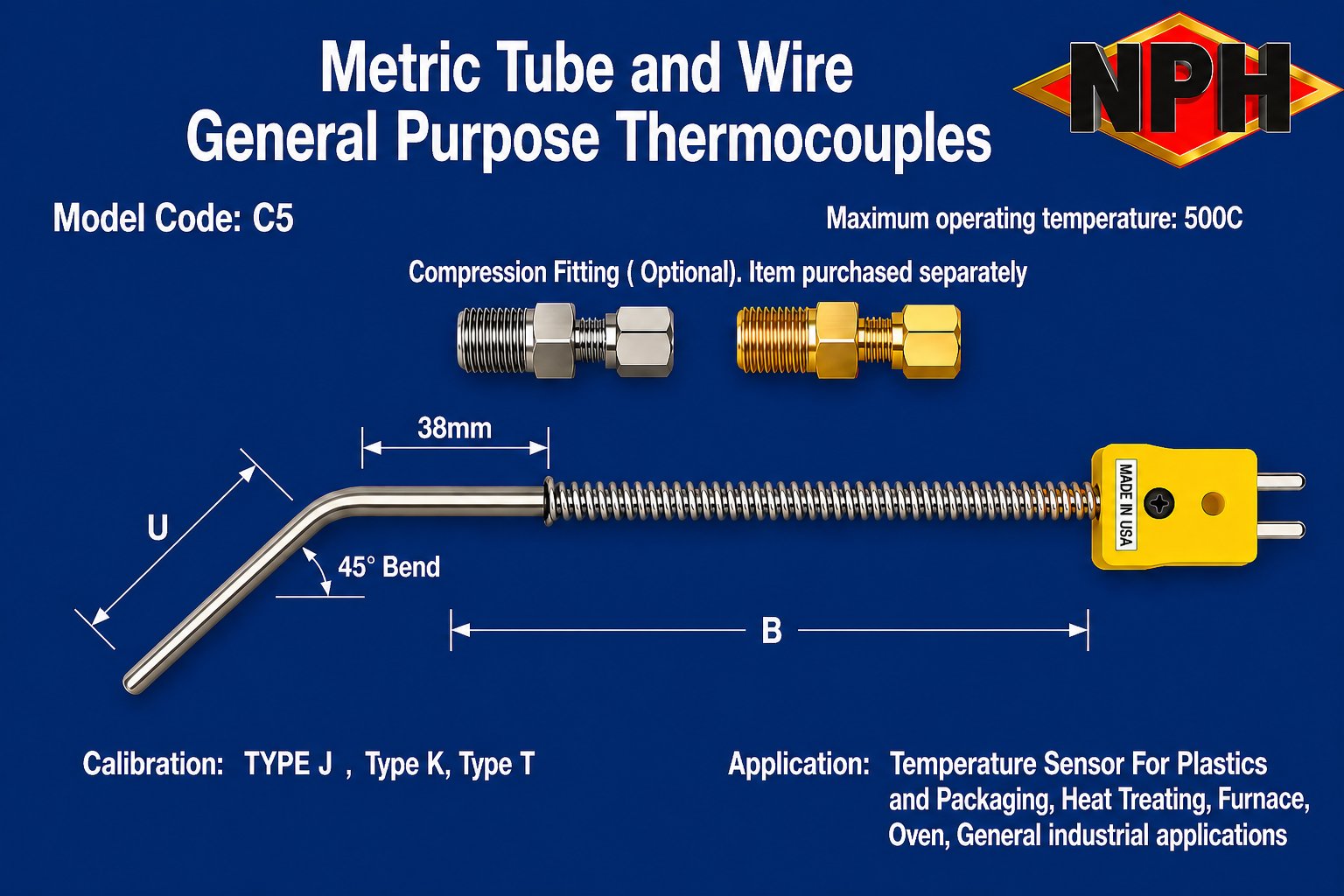
NPH Metric General Purpose Thermocouple-45 Bend-C5
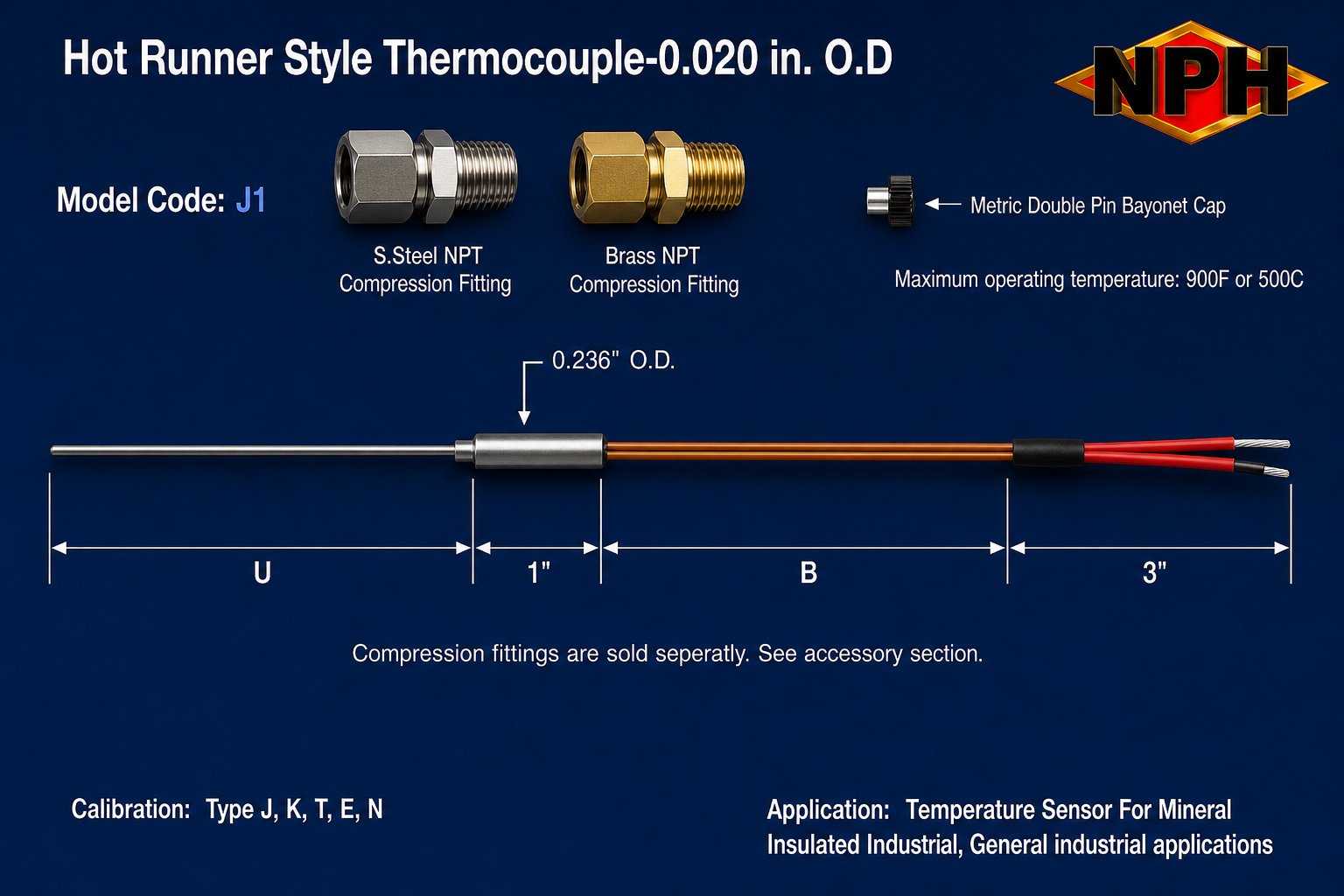
NPH Hot Runner Style Thermocouple-J1
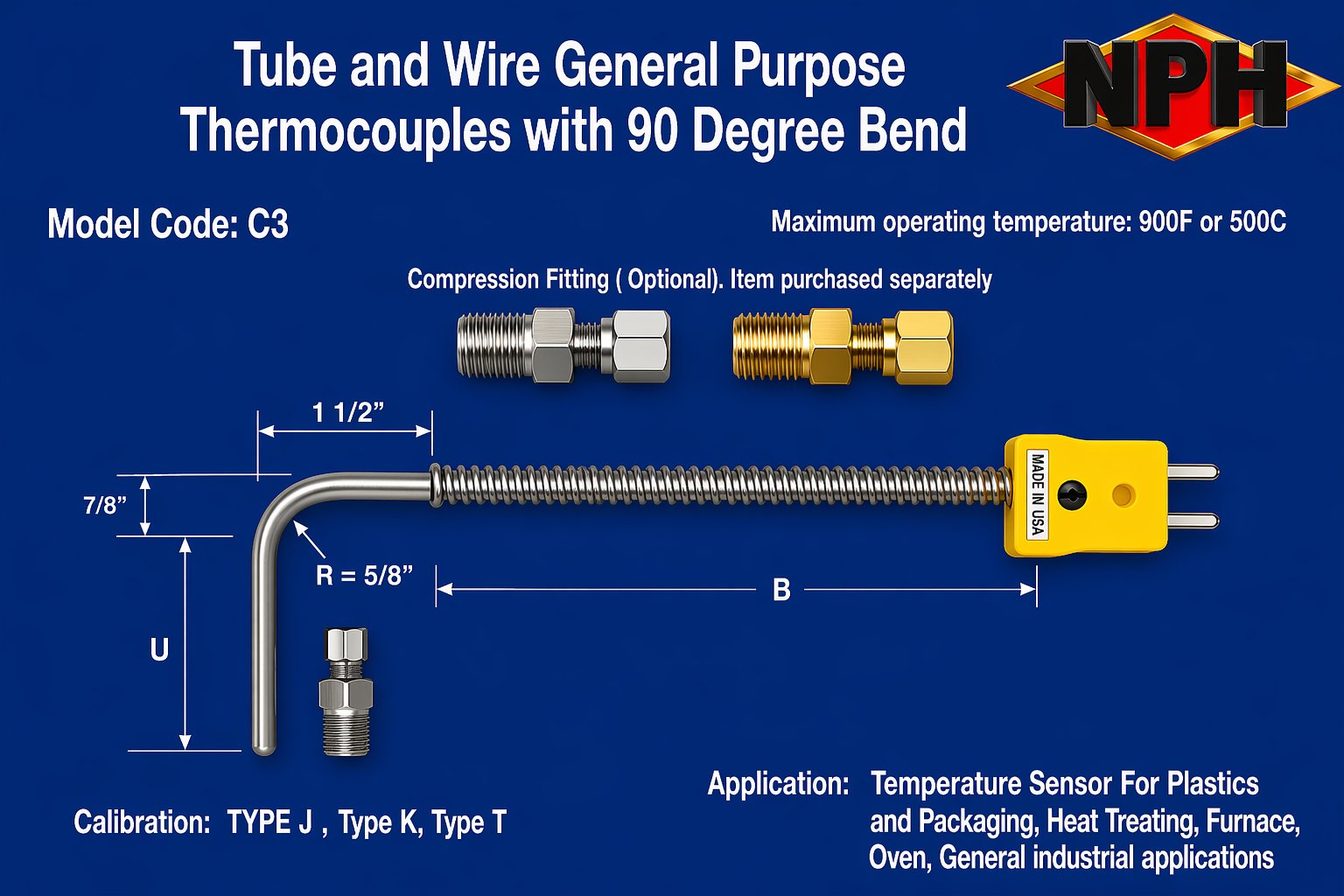
NPH General Purpose Thermocouple-90 Bend-C3
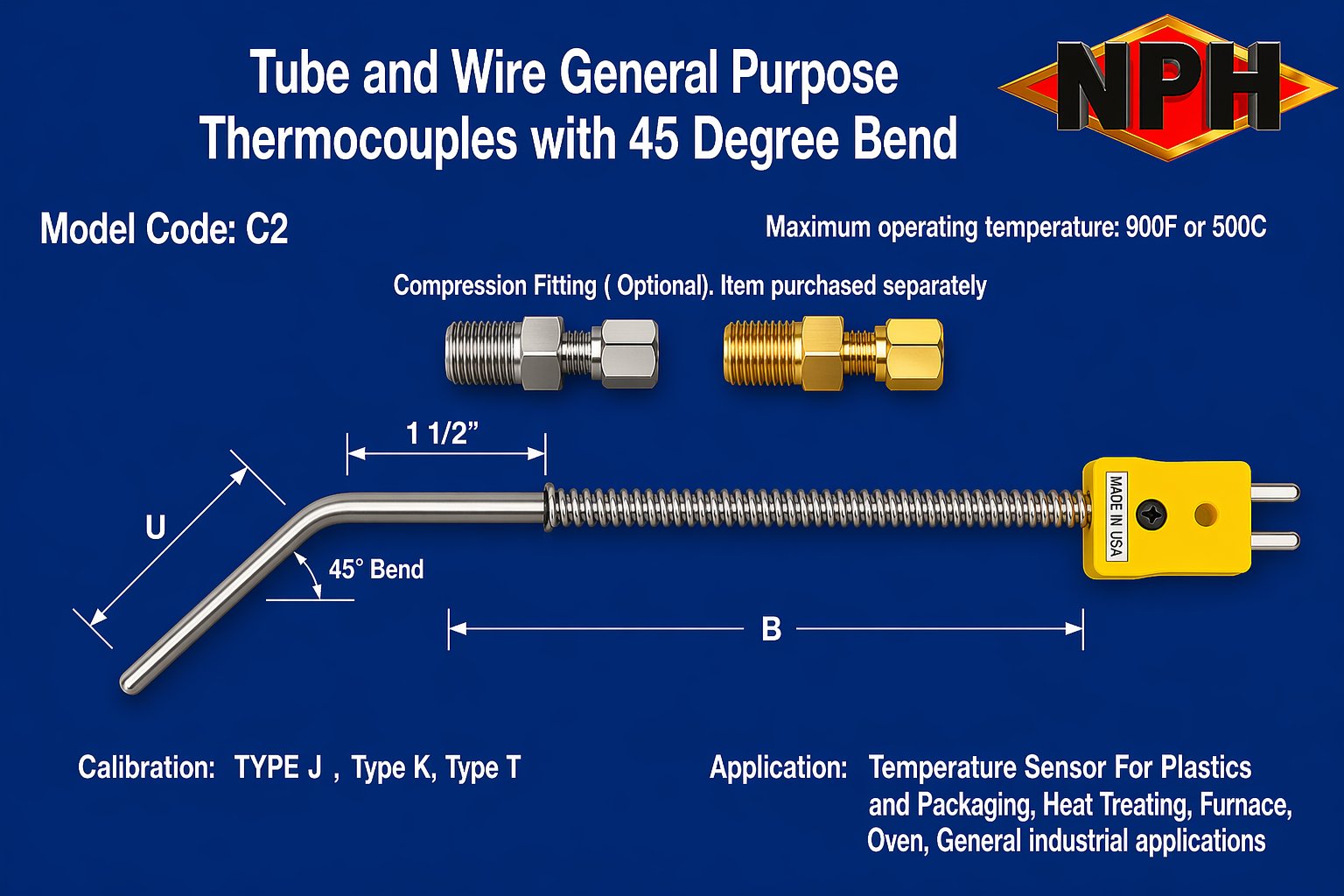
NPH General Purpose Thermocouple-45 Bend-C2
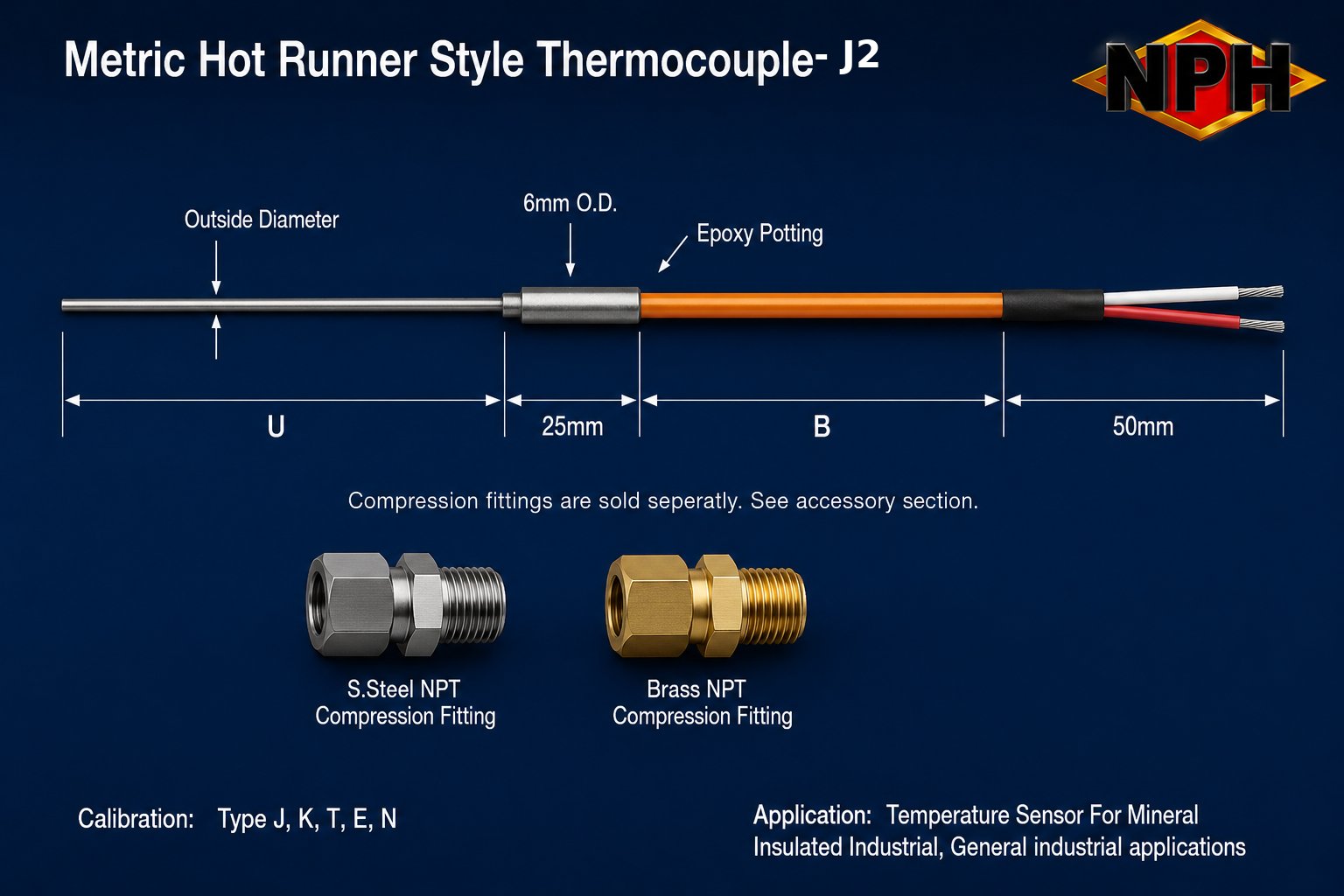
NPH Metric Hot Runner Style Thermocouple-J2
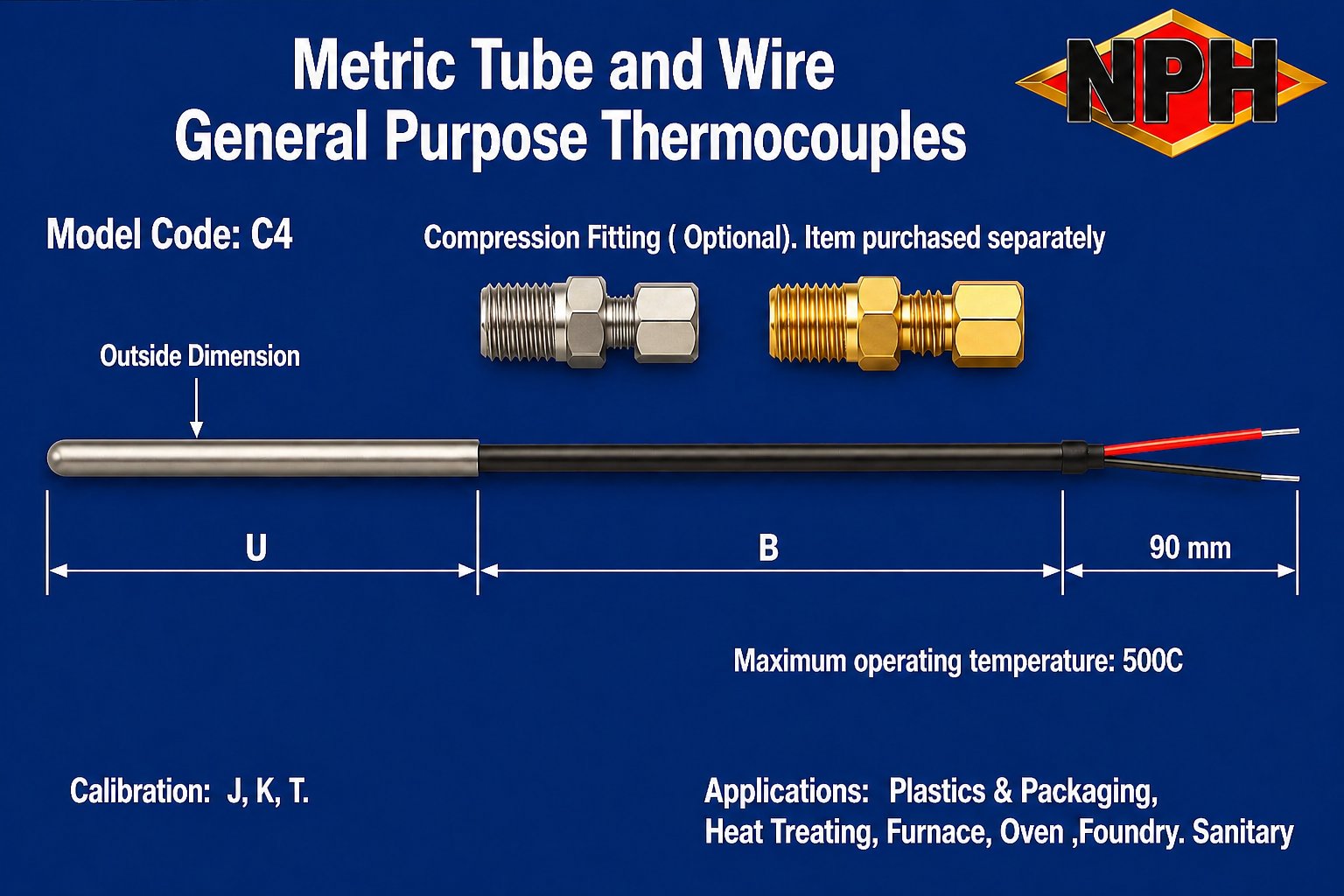
NPH Metric Size Tube & Wire General Purpose Thermocouple-C4
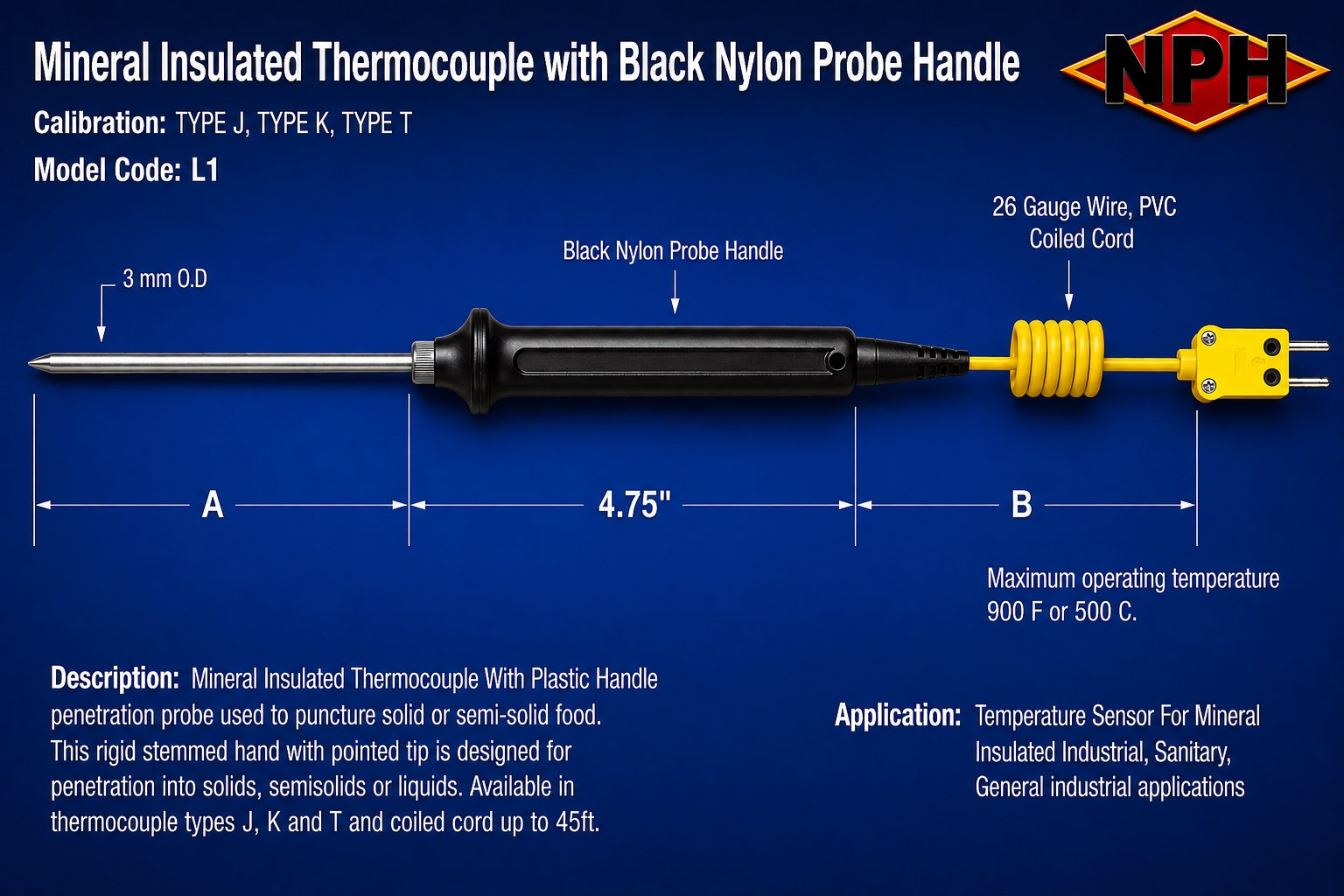
NPH Mineral Insulated Thermocouple With Plastic Handle-L1
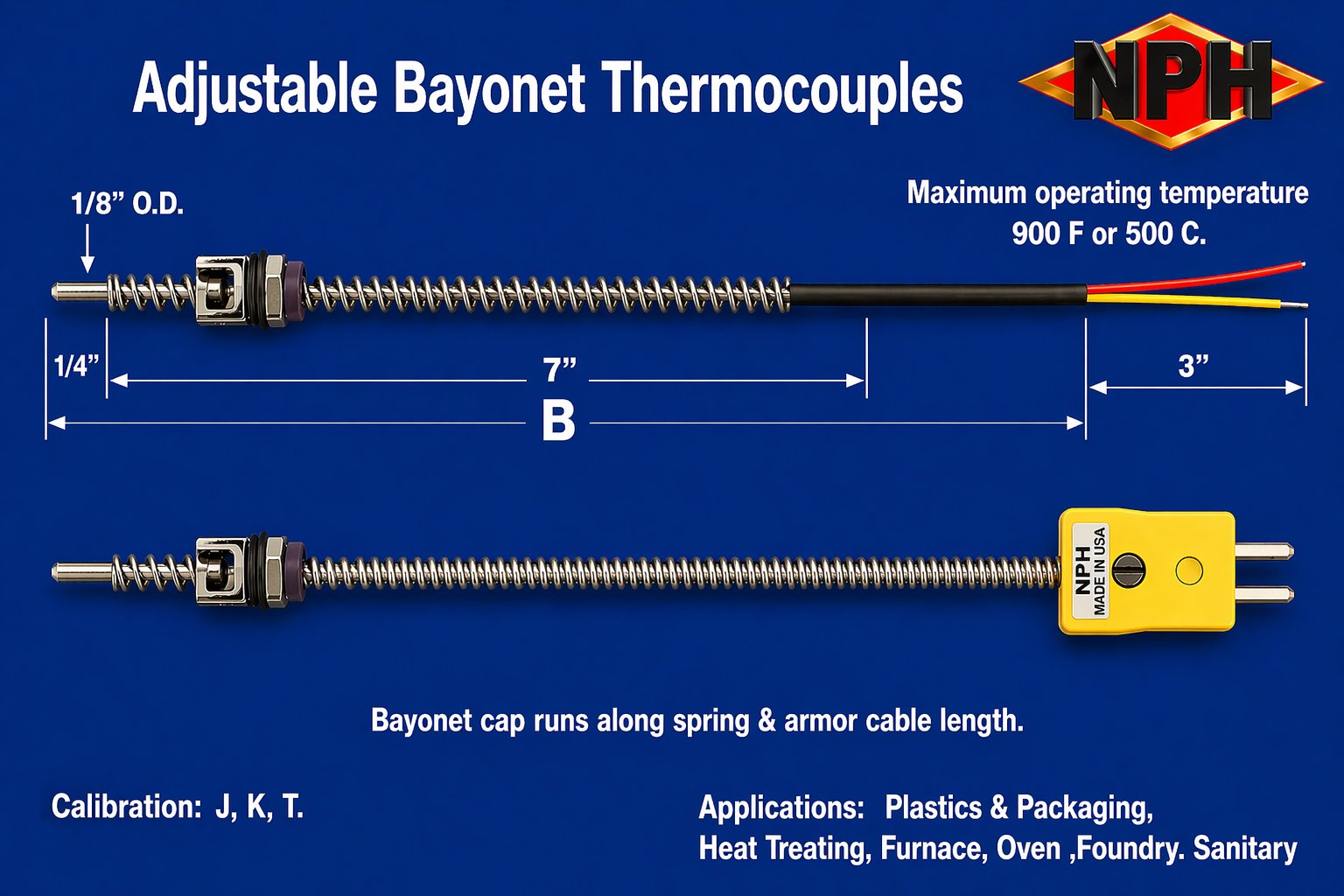
NPH Miniature Adjustable Bayonet Style Thermocouple- A1
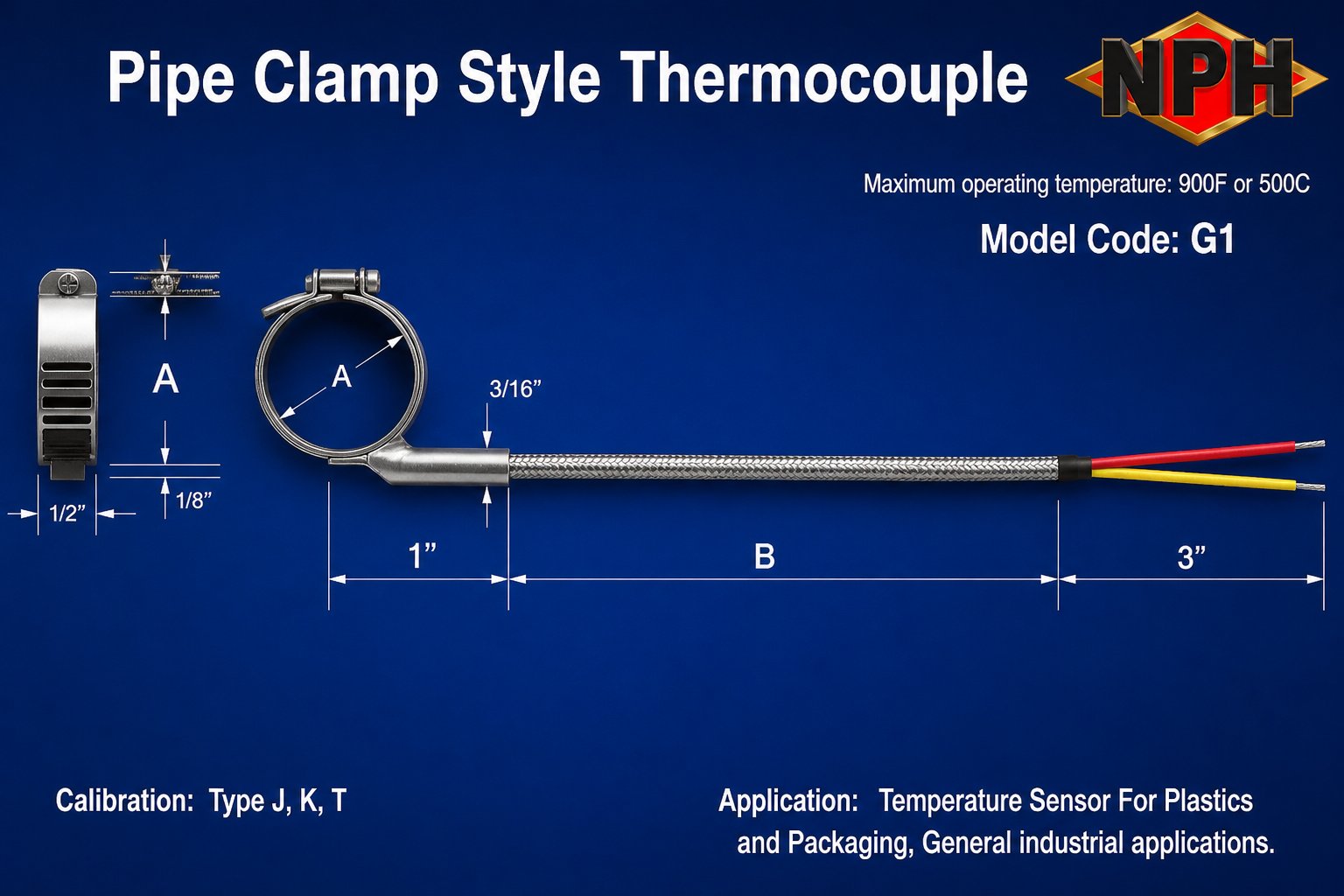
NPH Pipe Clamp Style Thermocouple-G1
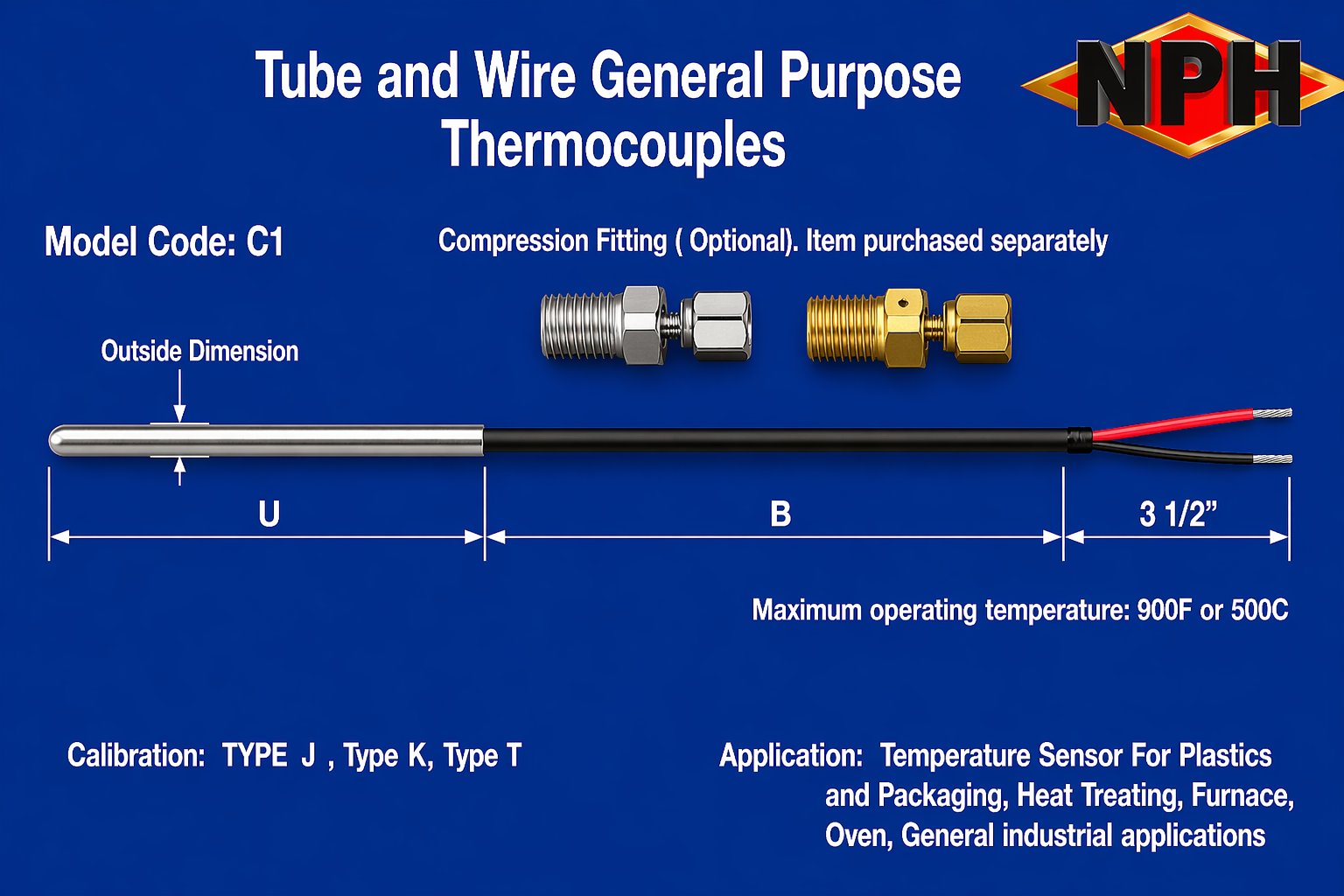
NPH Tube & Wire General Purpose Thermocouple-C1
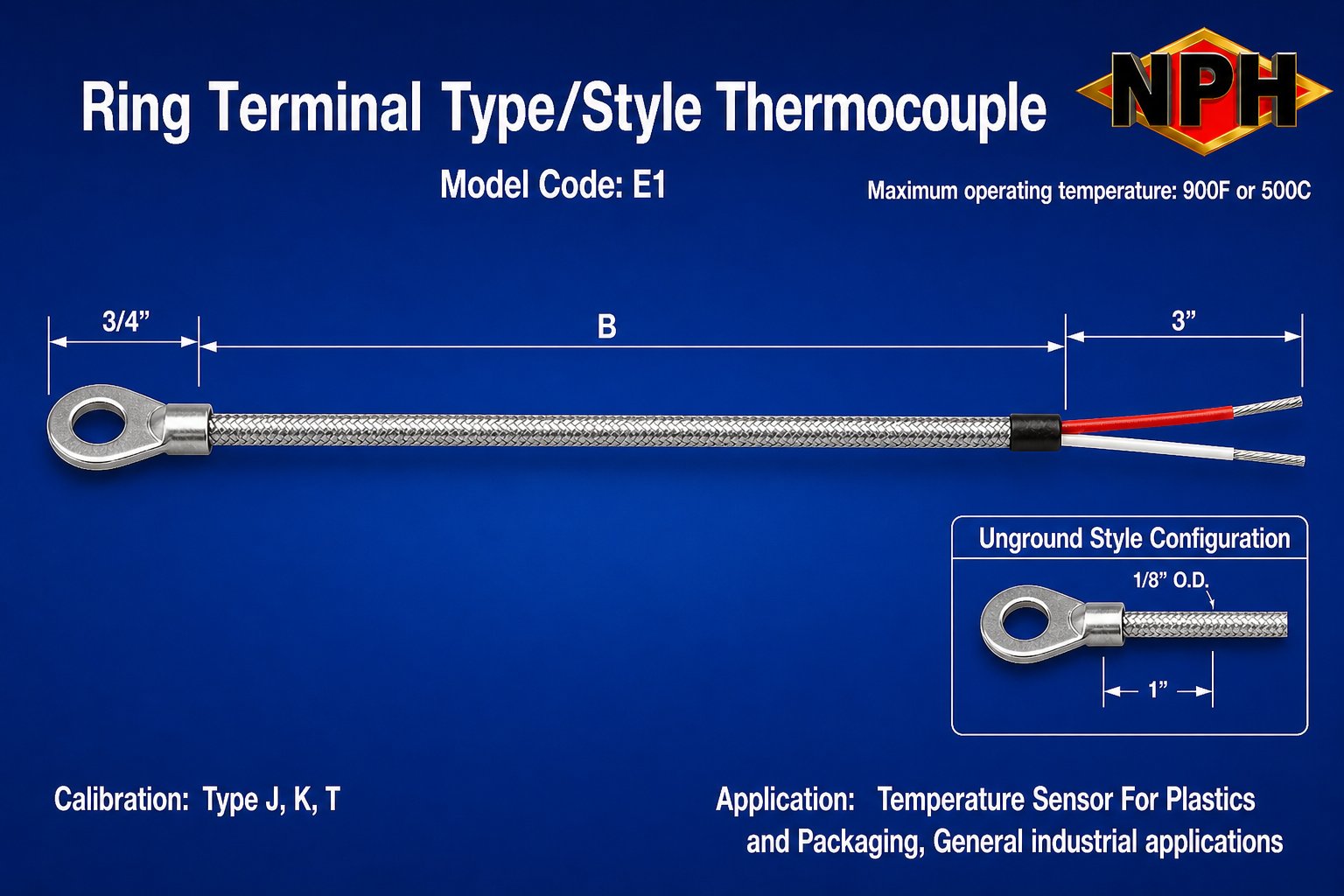
NPH Ring Terminal Style Thermocouple-E1


We Ship Our Kapton & Process Heaters To OEM’s & Industry World Wide